Not the End of the World

To commemorate a safe landing from the first-ever hot air balloon ride in Cappadocia

As I write this in my hotel room in the Uchisar Kaya Hotel in Cappadocia, it is 6.01PM, 5 July (Sat) which translates to 12.01AM, 6 July (Sun) in July. The world has not ended, contrary to the original prediction from author-artist Ryo Tatsuki. But that has not lessened the impact on inbound tourism, with bookings from travelers of nearby Asian countries down by half of what had been forecasted.

I am not sure what the impact on outbound tourism is though in my case, this has more to do with taking advantage of the 2-week lull that I get to enjoy before embarking on a new job. And so 2 weeks before the planned departure, I booked a one-week trip with a major Japanese tour agency to Turkey on a whim. Heck, I didn’t even read through the itinerary once I confirmed that Cappadocia was in it.

There wasn’t any time for that even with the demands of my consulting projects and purchase and move to a new studio apartment taking place in the same month. All happening right on the heels of my sister’s wedding in Singapore at the end of May.

I’ve got a friend who put it aptly as me having more things happening in my life in these three months (May – July) than most people would have in three years. It does feel like this, and I would have liked more time to digest each of these pivotal events and give them the limelight that they deserve.

Oh, the emotions that come from

  • bearing witness and facilitating the wedding of a most beloved yonger sister
  • committing to the largest financial commitment of my life along with its geographical implications
  • bidding farewell to the job in which I earned my stripes as a consultant and forged many friendships and;
  • embracing a new corporate identity and challenge in a completely new industry

Indeed, I could have spent those 2 weeks processing these emotions at my new abode. But instead, I chose to just launch into a new adventure. Which at the age of 31, is probably not something I can pass off as the impetuosity of youth.

It’s just impetuosity of “you” at this point.

But without a sliver of doubt, I would say that this is definitely one way that I would like to spend the end of the world. Waking up at 2AM and trying to fall asleep in my room in the world’s first curved cave hotel while waiting for the raison d’êter of the whole trip. Taking a minibus at 4AM to the launch point of the hot air balloon. Shuddering in the cold while watching the balloon inflate larger-than-life as the pilots trigger the flamethrowers at the mouth of the balloon envelope. Gasping in wonder with my fellow tourmates as the balloon bobs in its full glory above our 30-pax basket.

Climbing into the basket with the help of a step ladder. Gasping in wonder again as the basket floats tentatively above the ground. Surrendering to all wonder as the balloon ascends into the heavens and hover above the fairy chimneys which define the landscape of Cappadocia.

Up in the air

For the most part, everyone was busy trying to capture the moment with pictures and videos. I did my fair share of that too. But there were moments where I deliberately kept my phone away. It helped that I didn’t have my phone strapped on me and hence have to consider the very grave concerns for myself and any inopportune person directly below in the event of an accident.

For those moments, it was just myself at the edge of the basket. The chatter and hubbub of the pilot and 27 other passengers were drowned out by the magnificence of the sight before me. Unlike being in an airplane where there is always a pane (or two) of glass separating you from the skies, there is nothing mediating the view here.

It is not dissimilar to mountain climbing actually, save for the fact that you are suspended and idly bobbing around your surroundings. Free-spirited. And yet beholden to the wind.

There is only so much that the pilot could do with his purposeful maneuvering and ignition of the burner. But that much is enough for us to safely drift around the high and dry Turkish plateau strewn with otherworldly rock formations, alongside many other balloons that enhance the ethereality of the entire experience.

There is, however, no other phenomenon that captures our fascination as a species more than the sunrise.

And there the sun is, peeking between the clouds

I was among the first to spot that incandescent orb extending its golden rays across and beyond the horizon. And mindful of all the other Japanese passengers on board, uttered the words “日の出” (Hinode, which literally means Day Entrance). Just about every other head swivelled to revel in one of nature’s most beloved spectacle, that happens to be the symbol and flag of those 27 other passengers.

For that moment, all could agree that Japan is not the only Land of the Rising Sun.

A good 50 minutes after launching, the pilot directed us to get into landing position, which refers to crouching below the height of the basked and grabbing onto the holds lining the inside of the basket. All of a sudden, we went from gazing at one of the world’s most adulated panorama to scrutinizing the weaves of the ratan gondola. Save for hints strewn by reflective mirror-like surface at the top of the gondola, we were blind.

We could see the reflections of the grass patch as we glided across the fields, the balloon seemingly slowing but never stopping. Suddenly, we grounded to a halt, tilted at a 45-degree angle. For a few seconds, we remained balanced at that pivot as everyone held still and awaited further instructions from the pilot. None came from him; however, gravity broke the impasse and we found ourselves tumbling in slow motion to the ground.

The Landing Position We Were Not Promised

In bewilderment, no one moved. After the pilot told us to get up in English however, I again found myself to be the first to wiggle out of recumbence with everyone else still in tableau. After I crawled out, others followed and soon all of us were safely out of the gondola. We were now ensconced on flat land, dry bushgrass brushing against our heels and hems.

In celebration of a successful flight, the pilot popped open a bottle of champagne and the staff passed around the bubbly and cake for all to share. All the while, there were mutterings in the crowd about whether the flight/float can be considered successful if it resulted in the gondola tumbling on its side and its passengers crawling to get out.

And this was how the world did not end that day.

Pull-ups

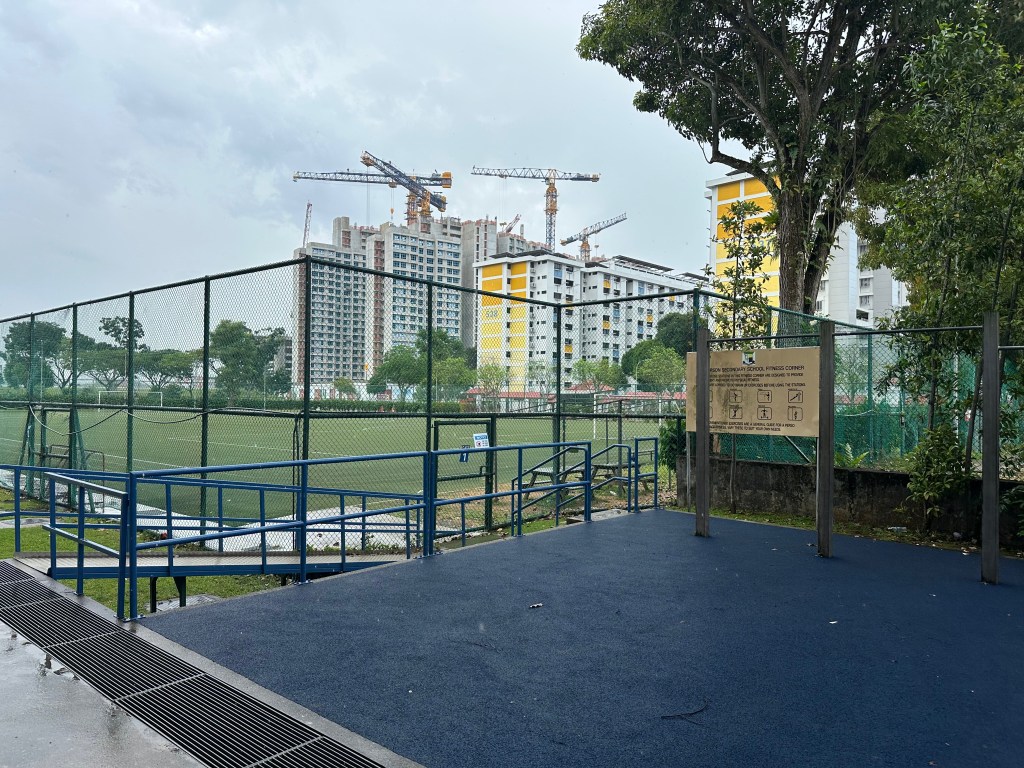
A common sight during the much-dreaded PE classes

Next to Art and Mother Tongue classes, I would say that Physical Education (PE) ranked up as one of my least favorite classes back in secondary school. You can count on me to be walking aimlessly around the soccer field during the mandated soccer practice. Where my goal was to stay away from the soccer ball rather than to chase after it. And when it inadvertently came my way, I would make some half-hearted effort to chase it and kick it back to one of my teammates, only to have the ball carelessly fly outside the boundary.

When it comes to sports, I wasn’t a sport to say the least.

But during the school’s 65th anniversary celebration, which doubled as an Open Day for alumni, the soccer field and adjacent pull-up station were amongst the first destinations which I gravitated to. The school had prepared a massive marquee over the parade square filled with festive fare. Which unfortunately was completely wasted on the likes of someone who made a conscious attempt to depart from his friend who had invited him to the celebration in the first place.

Just because this dear friend actually maintained friendships with our ex-schoolmates and was going to meet up with them. On my end, I had decided that I did not have enough social battery to say hello and make small talk with people that I might have once been close to, but who are now the ghosts of my past from half a lifetime ago.

Looks like when it comes to friendship, I am not much of a sport at all either.

What I am though is an introverted sentimentalist clinging on to nostalgia. It helps that the school hadn’t really changed all that much in the last 15 years. The pull-up station that had weathered the caprices of Singaporean tropical climate and many strained attempts from 15 year-old male adolescents remained exactly as they were in my memory.

One of the most difficult transitions for male physical fitness tests was the change from “inclined pull-ups” to “pull-ups” when one turns 15. It was difficult enough that most of (the non-athletic amongst) us couldn’t manage to do a single pull-up. And because the overall National Physical Fitness Awared (NAPFA) result was a function of the weakest station, that also meant that most of us could not pass it.

After several failed tries, the PE teacher would allow us to jump and grab the bar, and counted the jump-assisted attempt. Mr Singh was a trim Indian man with a neatly combed moustache who was usually decked in t-shirt and shorts . He who was also the PE teacher to just about half the students in the school and surely could not have most of his male students failing the test.

Collectively, we were known as “zero fighters”, an ironical spin on the term we picked up from history classes about the fighter jets powering the Japanese military at the start of World War II.

For the larger part of my last 2 years in secondary school, I was a zero fighter. But closer towards the O-level national examinations, I started going to the pull-up bars as a form of stress relief; between my grades and my body weight, pulling up the latter was beginning to feel more realistic.

Before I realized it, 0 became 1. And from there 1 became many. Such that by the time I graduated from secondary school, pull-ups became my best performing station. My frame remained what it was though and it was hard to shake off the cognitive dissonance (for me at least) that came from trying to reconcile my lanky build and my repetitions on the bar.

Winning admiration from other guys for physical performance was refreshing but not entirely foreign; I had received recognition for being amongst the Top 20 male runners for cross-country races in secondary school as well in multiple years. But it felt different to be acknowledged for strength rather than stamina for someone who has been skinny (fat) pretty much all his life.

Am I strong?

At an age plagued with insecurities, this ability was an ego booster and an affirmation to say the least. My self-worth became intrinsically associated with the ease and frequency which I could tip my chin over the bar.

Yes, I could and I would lift my own weight.

Such that even at this age of much-fewer-insecurities, this tenet has become firmly ingrained in my outlook of life. At its best, it champions a spirit of independence and self-sufficiency. On the flipside, it implies a certain nonchalance and aloofness which I am ready to admit to. All of which could be embodied in that single-minded decision to single-handedly build a career and life in Japan from scratch where I had neither kin nor kith.

15 years ago, arms shaking and palm calluses forming from attempting my first pull-up, I never thought that my life 15 years later would be what it is today. Back then, I never had grand plans for the future and my most immediate concerns were on making the grades for National Junior College and

To be fair, I don’t know what my life will be like 15 years later. Or even 5 years later, as I bluntly shared with a crowd of potential and current NTU-USP students during an alumni panel discussion at a tea session two weeks earlier. On stage, I shared merely that I would continue to be curious and continue to engage with the world around me, regardless of where I am in the world or what I may engage in as a main occupation.

In quieter moments however, the answer is a lot less lofty but no less cherished. I will still take the effort to ensure that the dear friend who invited me to the anniversary celebration will continue to be a significant part of my life. Our paths eventually converged in the corridor outside the library where I still ended up crossing paths with ex-classmates. I exchanged cursory hellos with the ex-classmates anyway, after which I left with my friend for lunch outside of school.

On the stairway down, we brushed past Mr Singh, whose hair is much more salt and pepper than before. And fleeting as the encounter may be, we reflexively uttered “Hello Mr Singh”. The answer now includes treating as teachers those who have once offered instruction and guidance to me.

And of course, being able to do pull-ups.

Sanatorium

Not the view you get from your average sanatorium room

One of the small joys of being multi-lingual is to be tickled by nuances of words that are so easily lost in translation. One of which is the word “sanatorium”, which I discovered very pleasantly over the weekend. My original understanding of this word is that it is a euphemism for “mental hospital”, and is usually located in rural backwaters. In Japanese however, the equivalent term is 保養所, which has a different connotation altogether.

In this very specific case, it refers to a high-end holiday resort a stone’s throw away from one of the most storied attractions (The Hakone Open-Air Museum) in a historic holiday local (Hakone) in one of the world’s most highly vaunted country for tourists (Japan). The resort takes full advantage of its location along the mountain slope in its architecture which maximize the views of the surrounding forests from guest rooms and its multi-storied outdoor onsen. All while minimizing guest capacity to ensure an exclusive experience that serves the purpose of its existence: for guests to recuperate and recharge amidst the hustle and bustle of work as a salaryman (working in the Information Services sector in the Tokyo Metropolitan Area).

As such a salaryman, I contribute tens of thousands of yen in health insurance premium to TJK, the health insurance association which covers 310,594 other fellow salarymen of similar profile. Unlike in more capitalistic soceities, right to health is enshrined in the Japanese constitution when it was established in 1947. The natural consequence of upholding such a right is that health insurance premium is structured similarly to taxes; it rises as income rises. And I’ve been fortunate to be paying more and more the longer I have been here…while claiming for not much else beyond regular dental check-ups which are subsidized by 70%.

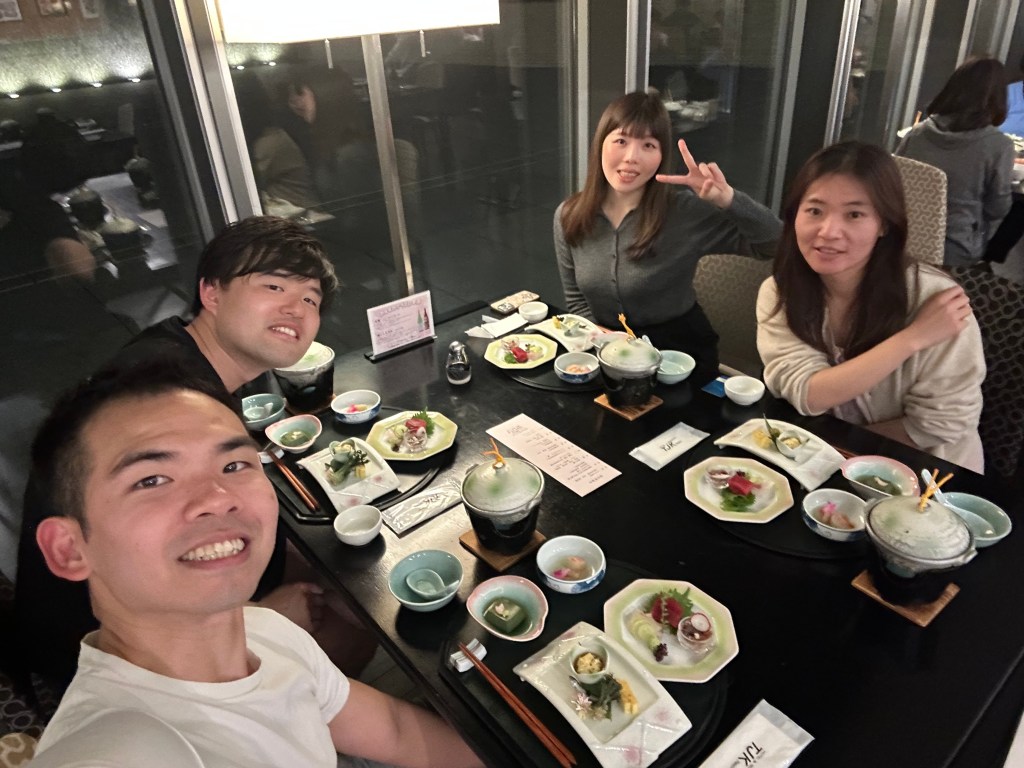
Which is why it was gratifying to be invited by a group of colleagues (and friends) to spend a weekend at the sanatorium owned and operated by TJK, the TJK Hakone Forest. The three of them, Hiro, Guilin and Maako joined the company at the same time late last year and dutifully perused the list of benefits that employees are entitled to. One of which is staying at the three sanatoriums owned by the association with the one in Hakone being the most luxurious of the three. All at the very-token price of 7,750 yen for room and 2 meals on a weekend at the heart of spring. With room referring to a 40 square-meter space with a floor-to-ceiling panoramic views of the eponymous Hakone forest that also comes with a kitchenette and a tub made from cypress bath. And meals referring to a full Japanese dinner banquet and a breakfast buffet with both Western and Japanese cuisine and locally-produced kamaboko (traditional Japanese fishcake).

Posing for dinner after being floored by the facilities in the resort

It’s such an unbelievable deal that a significant percentage of these 310,594 members frequently apply for it. Due to overwhelming demand, guests are chosen by ballot and we were fortunate enough to be chosen for our desired dates and accommodation type. In my case, I was even more fortunate to be invited to (or should I say free-ride) on my colleagues who went through the paperwork and a questionable booking system to secure this weekend getaway.

The availability (or lackthereof) of rooms in the resort even on weekdays

I had to constantly remind myself that this place is not a typical ryokan despite serving as one. The chasm in cover price and the level of amenities left a distant hum of cognitive dissonance in all of us who have been instilled with a mental map of price to expected offerings in Tokyo. It was a dissonance which we tried to both affirm and dispel by repeating at random intervals how unbelievable this whole set-up is. Even the prices of add-on drinks, lunch and amusement facilities were set at a level that further fuel this sense of unrealism; we were sure that karaoke rental rates there were even cheaper than those in the retro wooden two-storey establishments in the small towns of the countryside.

At a time where foreign tourists outnumber domestic ones (which we were made fully aware at Hakone Yumoto Station and on the ropeway ride), this resort stands out by being an almost-exclusive (with perhaps Guilin and myself being the only reason for the “almost”) Japanese enclave. This is not a surprise since eligibility for entry to this establishment is to be working and not touring in Tokyo. The other hurdle is the Japanese language itself. The advertisements and application for this resort are only in Japanese, with no incentive and effort for translations to other languages. This (in?)advertently repels foreign expats in Tokyo who technically can ballot for this. Once again and this time ironically so, the sheer lack of other foreigners in such a touristy environment entrenched my sense of disbelief.

Incentives shape architecture. In profit-making accommodations, rooms are usually compact and positioned adjacent to each other in cookie-cutter configurations to squeeze every last yen for every tsubo of real estate. In this non-profit sanatorium, rooms are generously spaced out to maximize the nature views and sense of openness of each. As if to encourage us to let go of the stress that we keep closed and contained within us on a day-to-day basis.

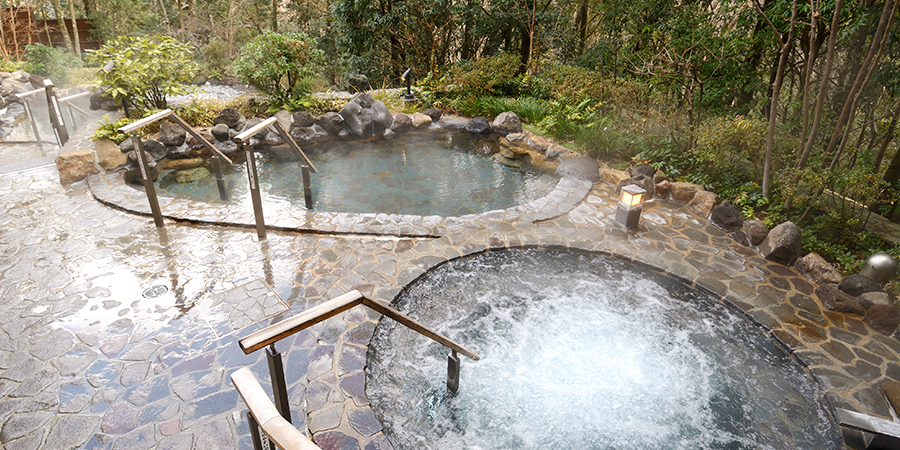
When it comes to de-stressing the Japanese way, one thinks of onsen. This is where the crown jewel of the resort truly shines. The changing room contains 50 (or thereabout) locker spaces, one sauna, one indoor pool and four outdoor pools cascading across three different levels and flanked by the forest. But whenever we were in the bathing area, there were 5 or so people (including us) and thanks to the different levels and distance, would not obtrude into one another’s personal space. To bathe both in the forest (森林浴) and springwater in such a dedicated expanse is the pinnacle of luxury and relaxation indeed.

Image from the official website; Hiro and I had the luxury of soaking in one pool each to ourselves

When planning for the trip, there were some concerns about how we would entertain ourselves at night after dinner. To that end, both Guilin and Maako brought along their Nintendo Switch, with enough controllers to test our growing friendship by playing Overcooked. In the end however, our friendship was tested over table tennis. Or to be more specific, Hiro and Guilin’s friendship as they bickered (very much in jest I hope) over their competition and cooperation when it comes to returning the ping pong ball from Maako and me.

Admittedly, what I gained more from the trip than the scrumptious meal and the extravagant room and bathing facilities was a newfound appreciation for active entertainment and amusement. And I am sure it was not just me. Hiro might have initiated the idea for playing ping pong when reminiscing about his days at Cambridge but in the end, it was all four of us who more than willlingly returned to the nondescript amusement room twice the next day.

I have never (and still don’t) fancy myself a sports-type. Yet I cannot deny the excitement which I felt when seeing my shots land and building a rapport through volley records with my friends.

We counted the record number of times we could successively keep the ball bouncing on the table more than who “won” or “lost”. We cheered one another with every skilful serve or masterful maneuvering. We lost track of time playing and many calories along the way too.

I did not get much sleep that night (more a personal quirk than a lament about the facilities). But the sojourn in the resort did rekindle a passion to try new things, make more mistakes and get better. This perhaps more than anything is what was needed from the stagnation of being in the same type of job and doing the same kind of work for more than five years. Here, more than any 慰労会 (dinners given in appreciation of one’s hard work) or utterance of お疲れ様です (a greeting which loosely translates to ‘thank you for your hard work’ used among colleagues), I feel the gratitude for my work and commitment since coming to Japan.

I believe all of us felt the same. The only question is when our next trip back to the sanatorium will be, hopefully out of want than out of need.

Juunenmae (Ten Years Ago)

Exactly ten years ago from today, just a day after arriving in Japan for the first time

It’s been more than half a year since my last entry, which is to say that this entry has been half a year delayed. Life (or if I were to be more honest, laziness) got in the way.

Today marks the start of a new year in Japan. The cherry blossoms are in full bloom here in Tokyo although that’s the only natural phenomenon in sync with the calendar this year. As I type this, it has been raining monsoon-like for 24 hours with temperatures hovering around 6 degree celsius in the day. Spring may have sprung upon us, but summer threatens to creep in even while winter refuses to let go.

Ten years ago, it was different. I would know because ten years ago from today marked my first ever trip to Japan. Back when I was touring and looking at the country with sakura-tinted glasses. Back when I would muster the courage to ask questions in Japanese to service staff memorized from textbooks and guide books. Then do a little jig to myself when I get a nod of understanding and a reply that I could not understand anyway.

Ten years ago, I checked into a hotel in Tsukiji upon touching down and thereafter let myself roam and explore without an atlas, thinking that I’d end up in Ginza only to find myself in Shiodome.

Ten years ago, I woke up at 3AM in the morning just so I could catch a glimpse of the first auction of the day at Tsukiji. And killing time at the waiting area by reading Letters from a Stoic.

Ten years ago, I was trying to submit a claims form for a CD transcription assignment (back when AI tools didn’t quite exist) by asking for a scanner before heading to Tokyo Station.

Ten years ago, I pulled my Delsey wheeled luggage bag across the cobblestone walkways in the Imperial Gardens, and worrying about destroying the wheels on the very first day. Back when I was unaware that lockers existed in train stations, let alone tried looking for them.

Ten years ago, I had a Yokohama-style omelette rice bento for my very first ekiben on the Shinkansen.

Ten years ago, I felt that waiting a 15-minute interval between trains bound for Miyajima-guchi from Hiroshima station was very long.

Ten years ago, I struck up a fleeting friendship with a solo American female traveler who had been living in Bangkok while waiting for the ferry to Miyajima.

Ten years ago, I got lost searching for my own accommodation after safely guiding my newfound friend to hers and had to ask a young Japanese couple for help.

Ten years ago, I chatted with a guesthouse owner who knew about Lee Kuan Yew’s recent passing and expressed his condolences.

Ten years ago, I got lost again, this time at the sight of the Itsukushima Shrine floating above the sea against the soft evening hues in the background.

Ten years ago, I went to a ramen restaurant for dinner with this newfound friend and was prodded by a fellow Caucasian customer to eat the noodles quickly before they get soft at the owner’s behest. The Caucasian lady’s fluency in Japanese became my own inspiration to understand the language and culture of places that I visit and live.

Ten years ago, I embarked on my inaugural 11-day solo travel in Japan.

Ten years ago, I was so infatuated with the trip that I wrote a blow-by-blow of the entire journey by hand after I returned (and which I later typed and saved on the PC). I would be giving my memory too much credit otherwise.

Today, I woke up at 8.45AM in my sharehouse of five and a half years in Tokyo after spending the whole of my Sunday binge-watching When Life Gives You Tangerines.

Today, I worked at home through the company-issued laptop, grateful that I do not have to be commuting to the office given the suboptimal weather.

Today, I am reading a book written in Japanese about the influx of rich and educated Chinese nationals into Japan. It’s called 潤日 for anyone who is interested.

Today, I no longer have a deadline to my time here and have chosen to call Tokyo a home.

Ten years ago, if I had known what I do now, the trip to Japan would not have been as dreamy and magical. Tourists are not subject to onerous income taxes and deductions and neither are they expected to give fluent work presentations in Japanese. What I do know is that if I had not gone on that solo trip as a very impressionable 21 year-old, I would not be here today, sufficiently charmed by my experiences as an explorer to presume that living here would be a way to extend that dream.

As a much-less impressionable 31 year-old, I know better now. That the grinding bureaucracy is more the stuff of nightmares for one. But I also know that I have grown use to the cleanliness and little civilities here. This is also the place where I have achieved many of the milestones that mark adulthood. This is where I feel at ease to be myself and be by myself.

The longer I stay, the more comfortable I get. Too comfortable perhaps. Throwing down the gauntlet and uprooting myself to live and work in another foreign country again though may be besides the point. It feels almost petulant to be repeating the challenge just for the sake of it. That being said, my current lackluster efforts to learn Korean and French would definitely benefit from this.

Beyond expanding my polyglot portfolio, I do have a keener interest in being better at what I do. Consulting as a profesison has its fair share of criticisms, but I still do believe that there is value in what we do in certain contexts. Even if it’s just borrowing the client’s watch to tell them the time. Because based on my experiences, it can be audacious to assume that the client can tell the time and understand its full implications. Plus there are times where many key stakeholders may have different methods and incentives for telling the time.

Ten years ago, I had no idea what I wanted to do. Only what I could not. And I ran away to Japan shortly after as a way to escape from turning down what I thought was the biggest dream and ambition of my life back then.

Now, I have a clearer idea of what I am doing. And what I can. And I am still in Japan to see this through.

White Horses

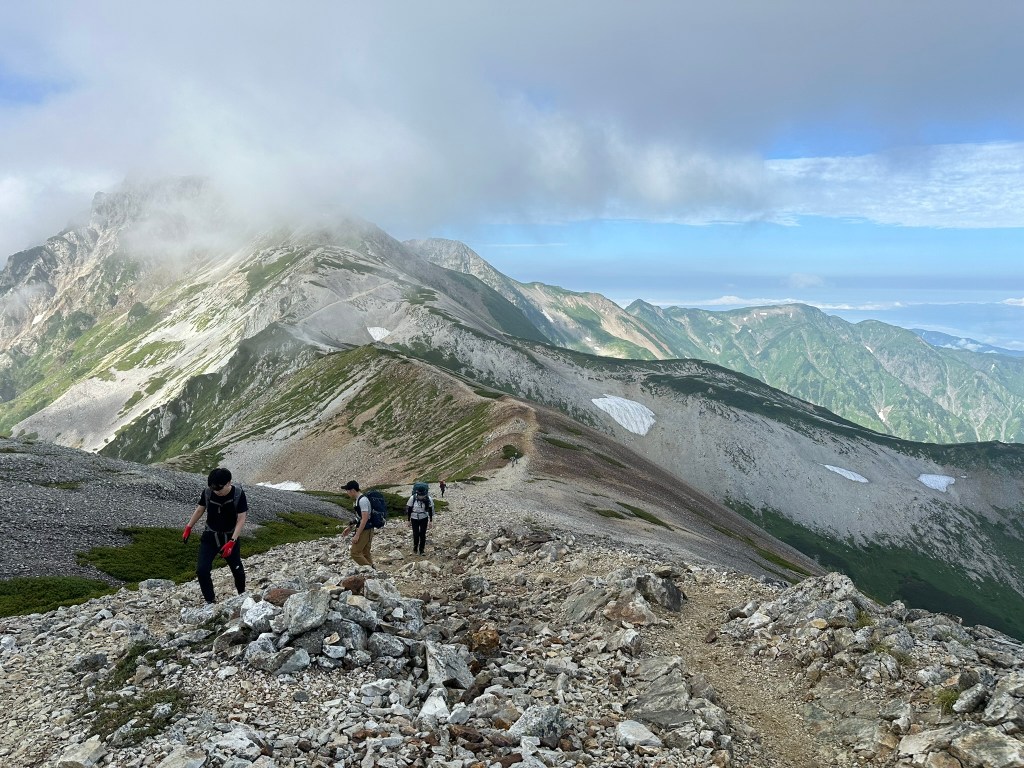
Taken from the top of Mt. Shirouma (White Horse)

Hiking / 爬山 / ハイキング – whenever someone asks me what kind of hobbies I have, that becomes the default reply. But since I twisted my ankle badly early early last year (and just general laziness really), I haven’t been doing much of it at all. To the point where claiming that as a hobby feels closer to fabrication than fact.

But that was something I wanted to change. Instead of just hoping that my injured ankle would fully rehabilitate on its own, I started going for regular chiropractor sessions. All with the goal of conquering the mountain of my screensaver dreams: Mt. Shirouma (白馬岳) in the Japanese Northern Alps.

That dream started when I was traipsing around the Internet while holed up in the IT service center in an industrial estate in the middle of Kanagawa prefecture in my first consulting engagement. The work was as dry and dreary as the premises were and to distract myself from the very real possibility that I might have screwed up my professional life at its very outset, I searched for mountains to climb. That was when I chanced upon this webpage. And in that moment, I knew that I would not be able to leave Japan without stepping foot on this majesty of a mare of a mountain.

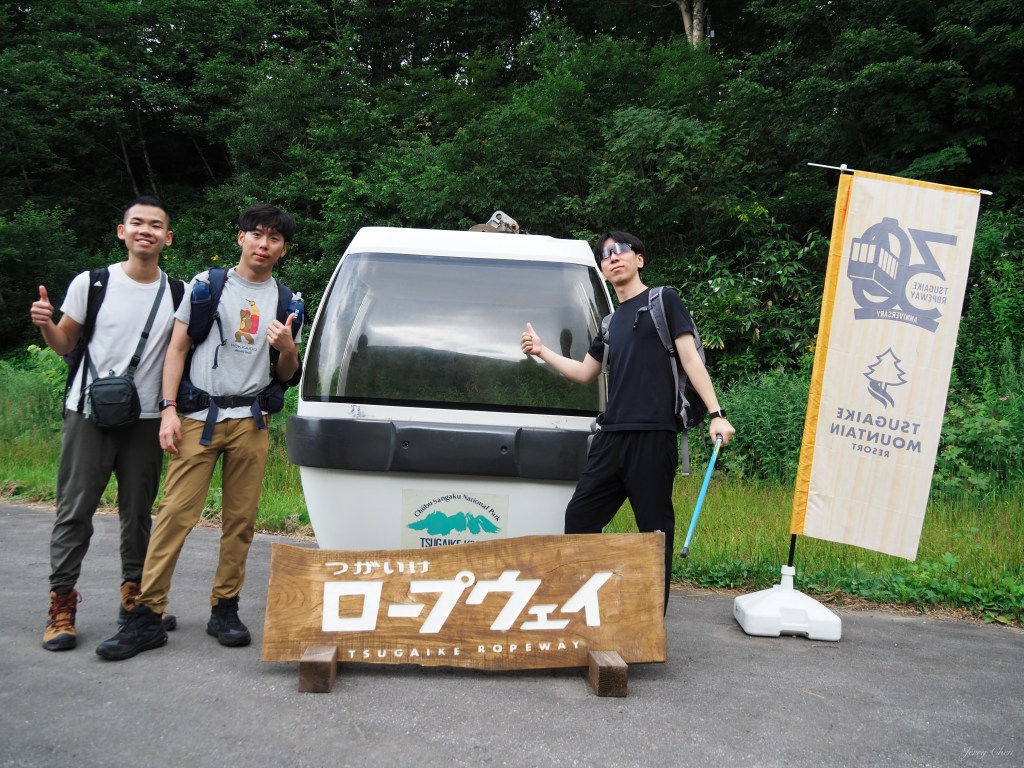
Fast forward five years and many consulting engagements later, that screensaver became a sight I got to behold with my own eyes. And with the best hiking buddies that I could ask for on this trip really: Jerry and Yuhao. If I had wanted to climb Mt. Shirouma alone, I would have done that much earlier on. But I wanted to share this experience with friends whom I know would enjoy this as much (along with a whole list of other demanding attributes on my end). And if it took years to find this combination, then years it would take.

The hike itself did not take as long: about two days with an overnight stay at the large mountain ‘hut’ (more of a lodging complex) a 20-minute climb from the summit. But it was definitely one that all of would remember for a long time to come.

Truly the calm before the (thunder)storm

Not least because we had to brave a thunderstorm to reach our destination! The weather forecast had not been great and I has been rather circumspect about the hike. Meanwhile, the rest of the group was more optimistic, with Jerry claiming that his ‘teru teru bozu‘ (テルテル坊主) – that refers to a traditional Japanese handmade doll for dispelling rain – abilities will ward off bad weather. Unfortunately, the mountain ranger whom we spoke to did not agree with Jerry’s sunny outlook and warned of an impending typhoon in the afternoon. It was already 9:30 AM then and

But all of us were ready to hike after spending the better part of the previous day making our way by Shinkansen and then rental car to Tsugaike Kogen, the base of the hike. There were a few clouds above us, but by and large the skies were clear…

…until they weren’t and a sudden torrent of rain left us scrambling to waterproof our clothes and gear along the granite slopes two hours into our ascent. We trudged on as the heavens continued pelting raindrops on us, occasionally letting up but never truly giving up.

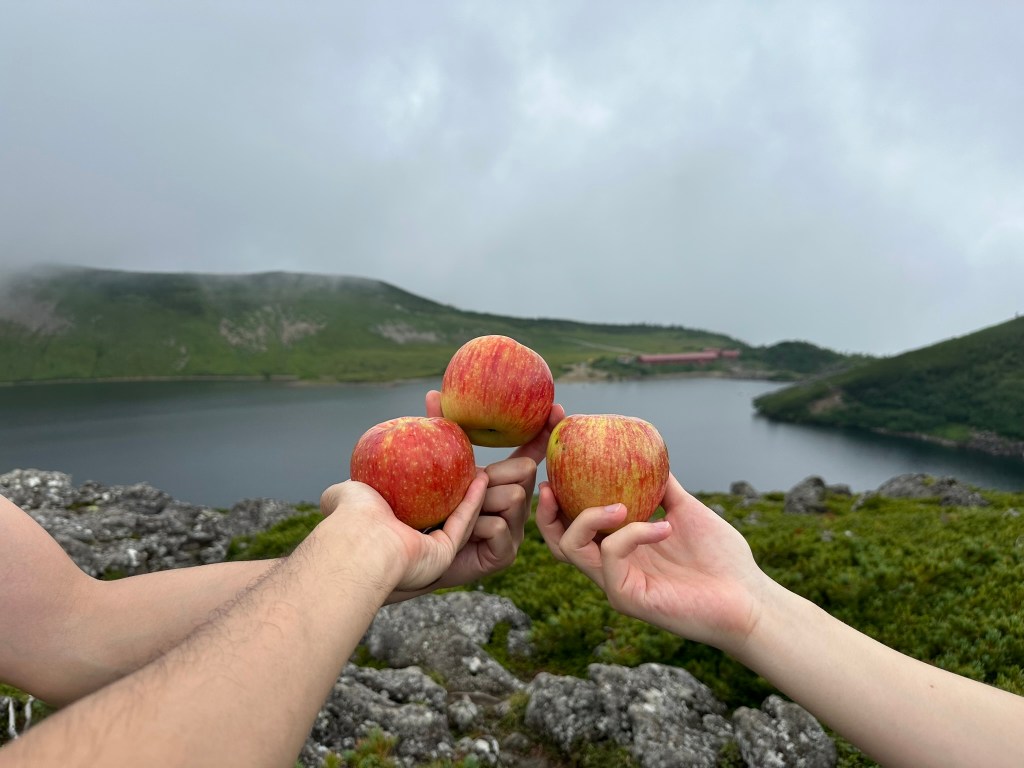
After an hour or so of intermittent rain, we began to see interstices of sunshine poking through the overcast sky. It seemed like a tentative truce among the heavens had begun. We found ourselves a rest spot in an outcropping overlooking the Hakuba Oike Lake and enjoyed the locally-produced apples bought at a pitstop at the local supermarket the previous day.

These apples taste a lot better 3 hours into a hike and 2,400m above sea level

At 1PM we found ourselves at the compact Hakuba Oike Hut which marked the midway mark of the hike to our destination. There was a small cafe of sorts selling food and drinks at prices as high as the altitude was. ¥800 for a bottle of Ayataka green tea that would have cost one-fifth the price in most vending machines in Tokyo. Though as most dine-in cafe patrons would attest to, the payment for the drink is more for the table and the seat than for the beverage in and of itself.

There, we consulted with the store manager, a severe-looking Japanese lady with an uncharacteristically sharp tongue. That sharpness was on display as we witnessed a conversation she had with a Japanese companion/interpreter of a foreign-looking hiker. Apparently, the soles of the foreigner’s hiking shoes had come apart and they were deliberating if their party should continue to Hakuba Sanso, seek shelter at the Hakuba Oike Hut or attempt a return to the trailhead at Tsugaike Nature Park. She did not hold back in lampooning his naive hope of reaching the summit of Mt. Shirouma with a sandwich of a shoe.

In search of similar hard-truth advice, we asked her if our party of three, all with shoes thankfully still intact, should take the risk of attempting to summit Mt. Shirouma that afternoon. With a cursory glance at our build and a question about how long it took us to arrive at her hut from the trailhead, she ventured cautiously that it shouldn’t be too much of a stretch for us, especially since the latter half of the route would be less technically demanding, though it would be a touch longer. She added as well that due to the adverse weather outlook that her hut was already over-capacity. It was not raining though the skies were still grey.

The weather may be unpredictable, but our commitment to finish what we started wasn’t. Especially if the alternative entailed squeezing like a can of sardines with a bunch of other unwitting, stranded hikers, some who might have nonfunctional shoes. And so we continued our hike come what may.

Not recommended.

And there came a thunderstorm.

The showers we encountered in the first half was a dress rehearsal. This thunderstorm was the opening play, replete with peals of thunder reminiscent of applause from an invisible audience.

*Clap* *Clap* *Clap* Well done on choosing to push ahead *Clap* *Clap *Clap*

We were easily the tallest objects as no trees were found at this altitude and very susceptible to being struck by lightning. Despair was close at hand, but so was a dogged pragmatism to keep going because of a shared cognizance of inertia and an urgency to arrive before it got too dark.

不怕慢,就怕站。(”Don’t be afraid to be slow; just be afraid of standing still”)

In front of me was Yuhao who was soaked to the skin and alternating between cursing at the weather and the store manager who suggested that we proceed with the hike. His jacket, pants and shoes were woefully inadequate to handle nature’s ire. But still, he pushed on. In a short intermission, I passed to him a spare polyester jacket which had been largely protected from the rain. That gave rise to Yuhao 2.0, a version which was undoubtedly more upbeat.

Very-well-equipped Jerry and Yuhao 2.0

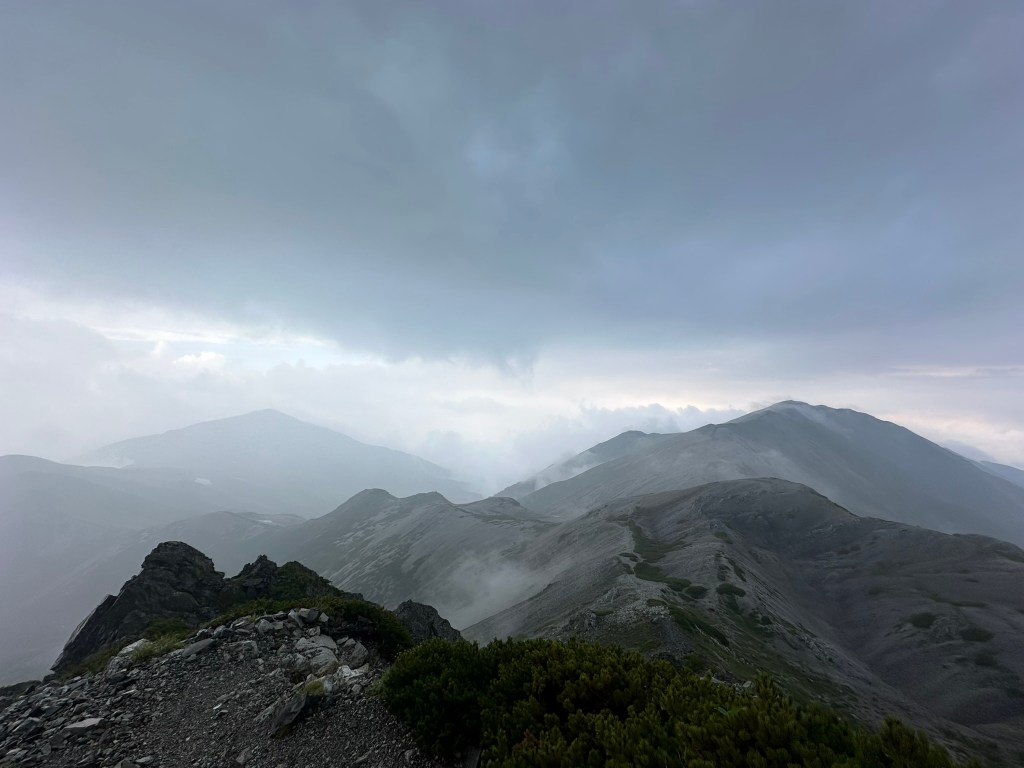
As we climbed higher, the thunderstorm started to subside into a drizzle. When we reached the mountain ridges, the path ahead sloped downwards and the cold started to set in. The surrounding mountains remained shrouded in clouds for the most part though there was sufficient visibility to behold the magnificence of the Japanese Northern Alps. And the great consolation prize of hiking in such inclement weather meant that we had the whole place to ourselves and there wasn’t another soul in sight for pretty much the entirety of the second half of the hike.

Nature gave us all a break

By time we arrived at the mountain hut, it was already 5.30PM. We were supposed to arrive at 3PM. The lack of mobile signal throughout the hike meant that I did not notice all the missed calls that came from the Hakuba Sanso staff attempting to ascertain our safety. After 8 hours of hiking, I had wanted to lounge by the space heater at the corner of the reception hall. But the notice from the staff about the closing of the dining hall at 5.40PM meant that we were soon chased to check in and eat dinner.

Not that we needed any prompting. We were ravenous, or at least I was, and there was nothing like a piping hot meal to recover from the arduous climb. We made it. It was only when I devoured the first clump of warm steamed rice that it truly sank on me that we had safely completed the ascent. I swallowed both the rice and relief in equal measure.

I would like to say that the descent was a much less dramatic affair. But it wasn’t. And in the best way possible because the views were absolutely breathtaking.

Is this what heaven looks like?

Now this is what we came for. Our feet were on solid granite ground but at 2,900m above sea level, we were otherwise surrounded by a sea of clouds. It’s moments like these when you can savour how wonderful it is to be alive, to be able-bodied, to have the means and the will to experience the best of what the world has to offer.

We weren’t alone this time and there was a steady trail of hikers who had departed at approximately the same time since we were all advised to return to trailhead by early afternoon to avoid another impending deluge. We needed no further prompting this time to set off early.

Even though we were returning by the exact same route, it felt like a new route altogether and there were countless times where we had to verify within ourselves where the ascent equivalent of every turn and meander was, especially if it was followed by a particularly challenging stretch. How did we cover all of that in the rain?

It did not look so long on the way up

As we traversed across the undulating mountain ridges and feasted on the surrounding panorama, I could not help but ponder about the name of the mountain: White Horse. A cursory search online (Japanese site) revealed that it arose from how a section of the mountain relief resembled that of a horse. But why white then? Because of the snow that brings the mountain relief into sharp relief?

The reason is alot more mundane: the horse itself was imagined to be those that were used in tilling the soil prior to planting rice in the paddies surrounding the moutains. And it so happened that this activity shares a homonym with the Japanese character for ‘white’.

I am not an equestrian, and have no plans to be one. But half a lifetime ago, the term ‘white horses’ did play a formative role in my life. I was in the school choir back then and we were preparing for the biennial choral competition, the Singapore Youth Festival (SYF). The set piece for the competition then was “White Horses” by Australian composer Stephen Leek.

I’m first guy from the left on the third row

Which is why the term ‘white horses’ for me has also come to mean incredible shared effort, to be followed by incredible shared results. For the SYF, the training practices were intense and gruelling but it resulted in us clinching the Gold with Honours award as a team. That sheer elation that the choir felt, that I felt, when the results were announced remains a core memory to this day.

Gallop and gallop 15 years forward, and we came, we saw and we conquered. And I know that now I have another core memory. Thanks for the memories.

50 seconds of fame

If you’re just interested in yours truly, hop over to 9:38 and 15:00

I’d like to say that my three-month absence from posting was because I was focused on my efforts on being famous. The bar here isn’t particularly high: I just had to be Singaporean and happen to walk along the Yaesu side of Tokyo Station at noon in the sauna that is summer here and agree to come for a Singaporean-themed dinner. If you know how good Singapore food is, you would know that there isn’t a lick of sarcasm at all here.

The fame though does come with an unintended consequence. People whom I have had not kept in contact for a long time found an opportunity to reach out to me. And some of these people include my ex-students who have blossomed into fine, young women. That is how we found ourselves trying to bridge the gulf of 7 years since they graduated from my Chemistry cram school classes, bonding that is neither ionic or covalent.

I fielded their questions as I had all those years before, patiently and honestly. The key difference now though is that I had just as many questions for them and how their lives have turned out to date. One of them is now an engineer at a top-tier semiconductor firm, and the other is an air stewardess with the airline that sponsored the production above. Life always has a way of coming full circle.

In turn, I surpised them with the fact that I am now working as an IT consultant. That’s not exactly the occupation that they thought I would be in; perhaps something in finance given that I was working towards an accounting degree then. Perhaps a surer bet would have been full-time cram school teacher. Truth be told, I might really have become one given how much freedom and enjoyment I was getting from that side gig. But at the end of the day, the heart of that job involved rehashing content I had learnt 7 years prior and there was very little room for my own growth. Consulting promised a little bit more and then some. Especially if it’s in a language that you could not speak and in a country which you do not come from.

And grow I did in so many different capacities. Not least of which is being a Singaporean overseas. There is something to be said about this community, of which a certain dose of intrepidity appears to be a common trait. Singapore is as comfortable as it gets for a home country, with the government looking out for just about every material need of its people. Rules are clear (and plenty), taxes are low (happy to pay Singaporean tax anytime now) and administration is transparent and efficient. You would need courage to want to go anywhere else. That or blindness and ignorance to the privilege that comes from Singaporean.

It’s a privilege that is especially immense in jobs. The strict quota on companies for hiring foreigners (8% for services firm, and 25% for manufacturing firms) means that Singaporeans are essentially competing in a different, more lenient labour market as hiring Singaporeans becomes the horse that comes before the cart. Companies accept this because the higher cost of labour, as opposed to having no restrictions on who and in what order to hire, is offset by the favourable business climate here. But with jobs becoming less defined by geography, there is only so much that regulation can do to continue protecting these jobs. This is not to say that Singaporeans are not deserving of what we have. We do work hard and compete and strive to be world-class, all while preserving the social compact with our government. But would my peers be able to earn what they are earning if the labour market were absolutely free from fetters?

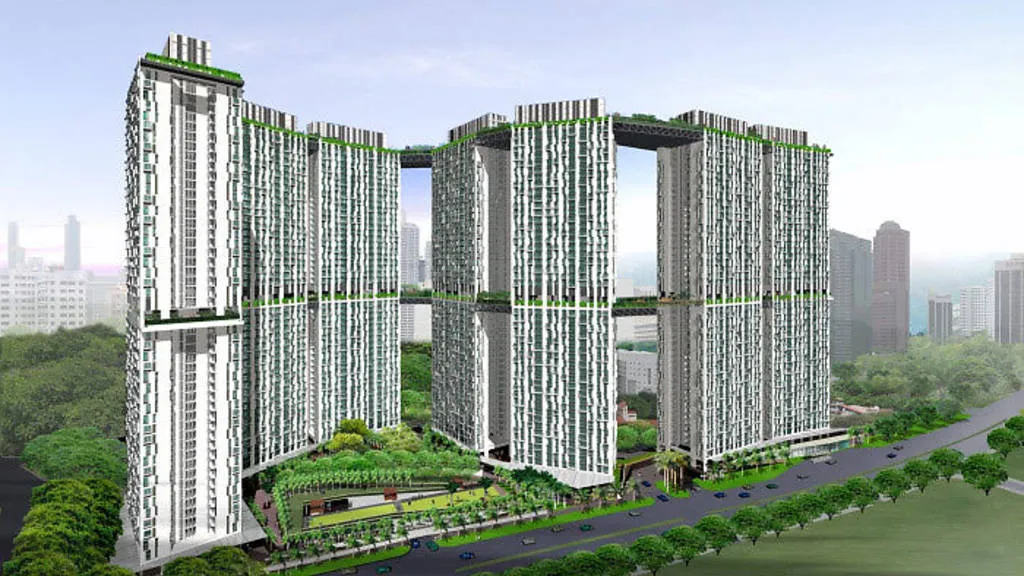
This privilege is also evident in public housing. I am of the age where half my peers are homeowners (well, even one of the aforementioned ex-students will be one) and the other half are figuring out their lives (this is where yours truly is). Discussions inadvertently turn to how much one has paid for housing and many bemoan how expensive even a BTO (Built-to-Order flats, typically seen as new entry-level public housing) is. But they haven’t seen how much a shoebox in Tokyo is going for these days even with the pummelled yen. Boon Lay is considered the Wild West back in Singapore, but in Tokyo, that distance from the city center is normal, if not close. And that’s before we get to the quality of public housing from the Housing Development Board (HDB). I have shown my colleagues images of the Pinnacle at Duxton and just about everyone finds it hard to recover from their shock that this is public housing in Singapore; this would have been a top-tier “Tower Mansion” in Tokyo in stature, amenities and location.

To be fair, this is a flagship project to commemorate the success of HDB in its early years

As a foreigner amongst other foreigners in Tokyo, there is no explicit privilege that we are accorded for holding the most powerful passport in the world. Perhaps some people might be able to discern where we come from our accent and the relative sloppiness of the dressing. That, and an understated drive for competence and relevance. It was a passing comment from my German manager here, and a tip of the hat to our efforts and reputation. The point sinks in further in an environment where I get to work with people from different cultural backgrounds and realized that these are not qualities to be taken for granted.

Then there is our obsession about money. Specifically, more of its acquision, storage and proliferation than its expenditure. At a Singaporean gathering here, the undercurrents begin tugging at you from a range of benign angles on current affairs. The weakening yen. A declining working population and its ramifications on the Japanese pension system. One feels the pull and inadvertently surrenders to the maelstrom out of equal parts habit and curiosity about our compatriots. Before we know it, we find ourselves drowning in discussions about our financial beliefs and tactics.

Help.

Thankfully, food is the other favourite focus apart from finances. I listen with relish whenever someone shares about their haunts when hunger for Hokkien mee hits. There are enough Hainanese chicken rice outlets now to drive a debate on which is the absolute best one, and which has the best value-for-money (there is no escaping this huh). When someone from home comes over, they inadvertently bring a savoury souvenir with them. Vacuum-packed slices of bak kwa (smoky pork jerky). A bottle of hae bee hiam (spicy dried shrimp) rolls. The mouth waters.

So at The Smart Local-organized National Day Celebration event at a Singapore entity-owned hotel a stone’s throw away from the Imperial Palace, we dug into the local favourites. Not just food, but also songs as the de facto national anthem streams throughout the entire dining room. Conversations dribble to a pause and everyone was soon singing along to the 1998 hit.

This is home, truly. Where I know I must be. Where my dreams wait for me, where the river always flows.

Home, Kit Chan

Home is where the heart is. And the heart bleeds red and white, in the silhoutte of a new moon and five stars arising out of the stormy sea.

Happy birthday Singapore. You’ll always be home.

Snapshots from Okinawa

Getting out of the airport, one is immediately struck by the humidity of the place. Okinawa in May feels like Singapore with the thermostat set a few degree celcius cooler; my friends had travelled 3,750 km only to find themselves back to where they departed while I found myself home away from home. But perhaps the more appropriate comparison would be Malaysia. Instead of towering skyscrapers, concrete structures of a few storeys high, ranging from quaint shophouses to private residences, scatter across the lush and verdant tropical vegetation. Even the heart of Naha felt like a throwback to the 1990s, save for a handful of newly constructed luxury hotels.

Perhaps a three-way fusion of mainland Japan, Taiwan and Malaysia would be the best way to describe it. Yes, Japanese is the official language there but in Makishi Public Market, it is the signs in Chinese promoting the preparation of live seafood on display that stand out. The streets are grimier with stalks of weed and the occasional wildflowers poking out from crevices on the pavements but general litter is conspicuously absent. The people are a tad more coarse and direct, but also warmer in their interactions. We talked about how one could transplant a random shophouse from Taiwan or Malaysia there and no one would be able to tell the difference, since the Japanese kanji and Chinese hanzi are just about indistinguishable without the hiragana or katakana flourish.

The highlight of the trip though was the food. I have a soft spot for Okinawan food seeing how among all the different types of Japanese cuisine, it is amongst the most homely. Kyoto-style kaiseki is exquisite no doubt but it is not something that one can afford to indulge in regularly and its fanciness (and coldness) invokes an unwitting hesitation to actually eat it. But it’s a different case for Okinawan food where signature dishes are typically stir-fried or stewed with literal and figurative down-to-earth ingredients almost guaranteed to laden an empty stomach. And they are good for your health too. No wonder that Okinawa is also one of the world’s Blue Zones, areas where the population has a life expectancy much higher than the global average.

Food does not lend well to my mediocre photography skills and inability to resist the scrumptious dishes laid in front me (the camera never really got to “eat first”). So instead, here are 6 pictures that completely fall short of capturing our vacation on this idyllic island which once bore witness to the “typhoon of steel”.

(Note: The nicer photographs are attributable to my friends)

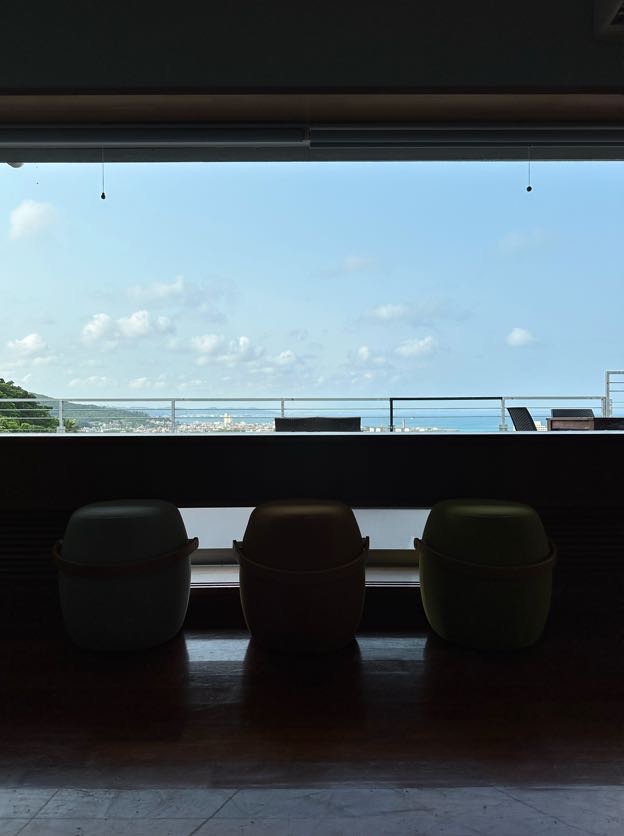
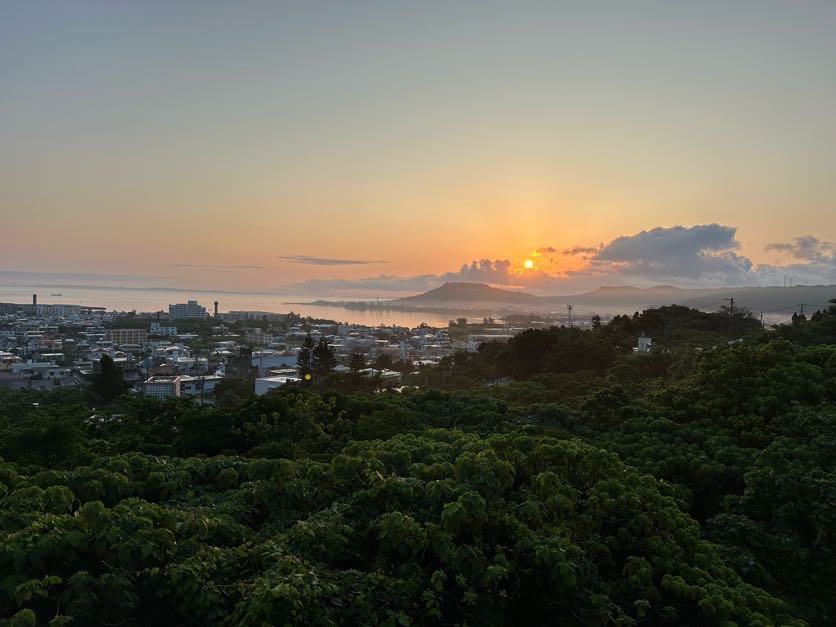
Nestled in Nanjo, a 30-minute drive from Naha, this Airbnb featured a jaw-dropping panorama of the urban coastline set against the cerulean Philippine Sea. It was home to our party of 3 for the entire trip, and a departure from the thrift that marked our Iceland trip seven years ago as students.

Instead of looking at the surface of the sea, we got to see the inside of it in the Churaumi (literally “beautiful sea”) Aquarium. It no longer holds the world record for largest aquarium in the world but it certainly holds a special place in our heart.

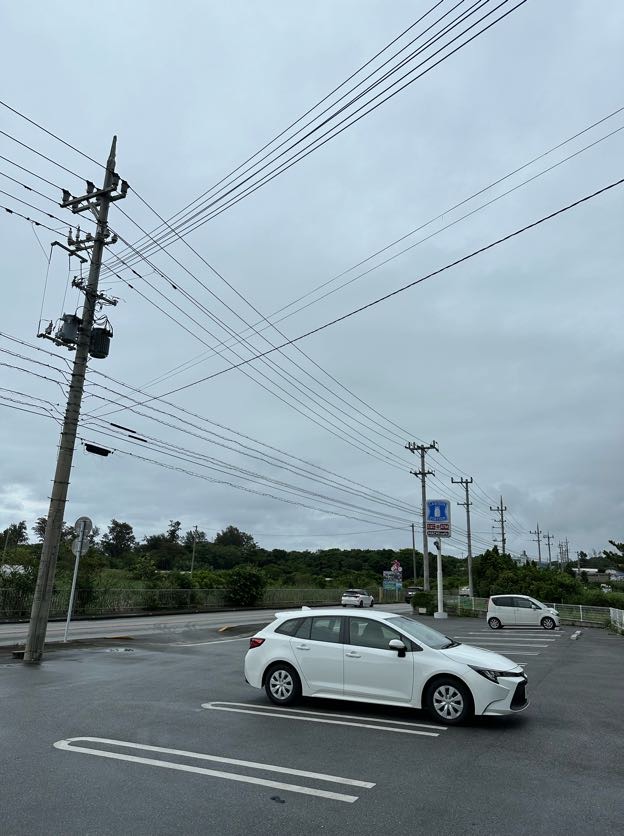
With the state of public transport infrastructure a far cry from that in the mainland metropolises, rental car was the way to go. And with it, we got to relish one of the idiosyncratic joys of roadtripping in Japan: a pit stop at the local konbini for coffee and snacks.

Limestone caves are not unique to Okinawa but the Gyokusendo is one of the largest cave systems in Japan; large enough to accommodate the cohorts of junior high school students who thronged through the narrow passageways.

The colored spotlights and shaved stalactite walkways were a reminder that this is as kitschy of a tourist attraction as they come. But that’s exactly what we were: tourists.

This was the promise on the Airbnb site that convinced us to book this place notwithstanding the musty odour and dated furnishings. A really great start to the day.

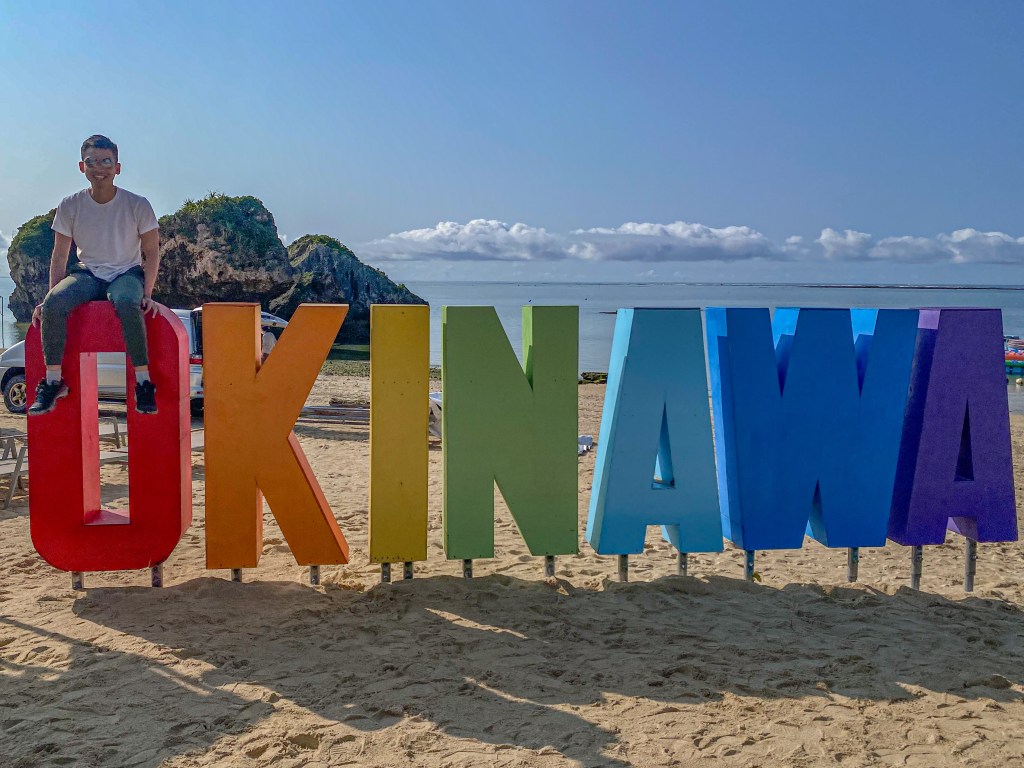
We were wondering about the best angles to take a photo with this iconic structure along Mibaru Beach when I noticed scratch marks on top of the “O”.

One “muscle-up” later.

30 Episodes under 30 Words

Among the young and aspiring amongst us, the Forbes 30 Under 30 is an annual honour roll featuring notable peers who have displayed remarkable achievement and potential in the less-than-three-decades of their lives. It is a list that comes with its fair share of controversy of course, from under-representation of women and racical minorities to the blacklisting of former honourees, especially in Finance (Remember Sam Bankman-Fried anyone?). For the most part though, it is the modern equivalent of knighthood for a young adult.

I do have the privilege of having the acquaintance of someone who has been bestowed that honour. But just about the only illustrous thing we have in common is a GPA above 4.8 in the first year of university in our student club. While he went on to co-found start-ups in finance in Silicon Valley after a stint as a Rhodes Scholar, I masqueraded as your regular Japanese salaryman.

It has been a move that has raised many, many eyebrows to say the least.

While I will never be able to count myself as an honoree in this life, what I can count and recount are 30 episodes under 30 words across 3 languages. Some are more ridiculous than others; all of them are part of the 3 decades of my life.

  1. Low-Maintenance. An adjective that my friends would describe my relationship with them. Especially after one of them had to call me through my number because I haven’t replied to her WhatsApp messages in 4 weeks. Turned out that I forgot to install WhatsApp after getting a new phone for those 4 weeks. We are still friends ten years later.

  2. Reliable. An adjective that my friends would describe me. Somehow, people would turn to me for advice and help when they need. I am never sure how helpful the advice was, but am thankful that my friends help me feel useful at times when I felt anything but.

  3. Skinny. How my physical stature has been described for just about my whole life. But no one measured my waist when I settled like a sediment into a purely sedimentary lifestyle during Covid-induced self-isolation. No one saw my shock when I could no longer fit into my only business suit.

  4. Smart. Most times a thoroughly undeserved compliment. At times a thoroughly deserved compliment.

  5. Benchmark. What my middle school teacher told me I was for an English essay more than half a lifetime ago. I had to check up what that word meant and it made me a little sad that my work was of a standard that others would have to surpass to get an “A”. And thought it wasn’t an “A” itself. (It was).

  6. Mugger. A Singlish term to describe a very studious person. Originally refers to someone who commits robbery with violence. Occasionally lobbed at me by classmates when I “rob” them of their grades by scoring good grades and tilting the bell curve against their favour.

  7. Fighter. What our choral director called us in middle school so that we would willingly spend hours rehearsing songs that were way above our leagues in terms of the rigour and musicality required. That’s about the only reason why I can hum along to Hungarian hymns.

  8. Grenade. Threw a live one with my sweaty palms as part of sergeant training school during my military conscription days. The supervising officer was as scared as I was during my turn.

  9. Cher. The truncated first name of a friend from high school and how she wants me to call her by. Also what my cram school tutees would call me when they want my attention on a middle school Chemistry question that was a part of their school assignment.

  10. Strategy. What I eat for breakfast, lunch and dinner. But inadvertently fail to remember and apply meaningfully in my own life.

  11. Anything. The name of a carbonated drink that went viral in my middle school days because it could turn out to be any random flavor. It was also my default answer to someone else’s “what do you want to eat for lunch” question until that same question was posed back at me once too often.

  12. Whatever. The non-carbonated sister of the Anything drink. My reaction to the yen falling precipatiously against both the Singapore and US dollar in the last few years.

  13. Inadequate. How I felt about myself for the longest time. And how I feel about my current income.

  14. Enough. How I feel about myself these days. Also how I feel about what I have in my life now to be happy and healthy.

  15. Compounding. The Eighth Wonder of the World when applied to interest (finance). A term frequently used by my parents when they remind me of the 4% per annum interest I am missing out by working in Japan and not contributing to CPF back home. Also applies to wrinkles and laugh lines.

  16. Change. What I find myself vehemently resisting and just as emphatically exhorting.

  17. Connect. How I see the role I play in my personal and professional life. Two culturally-different work teams across the Pacific. Two feuding friends over one of their love interest.

  18. Sorry. A word I used too often in the past, so much so that it lost its meaning during the times that I needed it to really mean something. It is now a word which I now use with greater care and reverence.

  19. Thank you. A word which can never be used enough and with the sincerity that it deserves. There have been so many people who have helped me in ways big and small, intentional and unintentional even if they aren’t a part of my life now.

  20. Ephemeral. How long the days seem, but how short the years are. “Sunrise, sunset; sunrise, sunset; swiftly fly the years; one season following another; laden with happiness and tears”.

  21. 哥 (Elder Brother). A role that I grew up with but got to grew out of as my two younger sisters become the fine women that they are.

  22. 老男孩 (Old Boy). A poignant song reminiscing about an old, lost love from the Chopstick Brothers with some of my favourite lyrics all-time. And a most succinct three-character self-description.

  23. 傻瓜 (Silly). What my science teachers probably thought when they saw me fumble with test tubes and other laboratory apparatus. Or when my army trainer presses his palm to his forehead for the nth time as he watches me grapple and struggle with assembling a rifle.

  24. 随波逐流 (Go with the Flow). An approach suggesting considerable flexibility and adaptability to the vissicitudes of life. What I like to think I have been adopting.

  25. 得过且过 (Go with the Flow 2). A more accurate translation would be to “muddle along”. It is also the more accurate state of my life on most days.

  26. なるほど (I see). Grunts of verbal affirmation that I give regardless of whether I understand what the other party has been saying. It helps that I understand more of it now.

  27. 板挟み (Trapped between a rock and a hard place). My friend described it more as between a pillow and a soft place when I agonized for more than a year about choosing among university scholarships.

  28. 運転免許書 (Driver’s license). The only other qualification outside of the Japanese language proficiency tests which I obtained outside of work. In my parents’ eyes, it is worth more than both my Highest Distinction degrees at one of the world’s higher ranking universities.

  29. 穴場 (Hole-in-the-wall). By definition severely underrated locales of which there are many in Tokyo. From the izakaya of an effervscent okaa-san who never fails to give me a hug before I leave to a showcase of memorabilia made of discarded scraps of paper and cardboard from years gone by.

  30. 詫び寂び (Wabi-sabi). An awareness of the transience of things and an acceptance of imperfection. A Japanese concept that still resonates deeply.

  31. BONUS: Non, je’ne regrette rien (I regret nothing). The title of the Edith Piaf song that plays in the movie Inception to wake characters from a dream state into a shallower level of consciousness. Also what I am committed to for the next 30 years.

Consulting Research and Google Senpai

When I first started out in consulting, I was usually tasked with conducting research. In a firm where native English speakers comprised of less than 1% of the total employee population, my command of the global business lingua franca stood out.

Occasionally, this entails conducting interviews costing upwards of US$1,000/hour to gather insights from industry veterans with decades of experience as a first-year analyst. One of my more harrowing experiences include reacting professionally in real-time to a German energy expert as he elaborated on the intricacies of VDE specifications and the policy decisions underpinning them over a phone call. All while my Japanese speaking-only manager looked helplessly at me while stealing quick glances at his watch. The only person who seemed blithely unaware of the time was the energy expert whose enthusiasm for the subject matter and extended compensation could not be told apart.

Most of the times however, research is a much less expensive affair that centers around entering search terms into Google. As much as my peers and I like to joke that we are paid to just Google (and create pretty powerpoint slides), timely and relevant consulting research is a lot more than that. Even though it is treated as a “basic” skill and often relegated to entry-level staff, doing it well requires the mastery of more sophisticated skills.

What is unfortunate is that this skill may not be well-imparted by seniors and managers who are busy fighting their own fires. The result for the poor first-year analyst is pent-up frustration spending needless hours of overtime trawling the web mindlessly for a usable statistical nugget which may or may not exist.

This is what I wish I could have told that first-year analyst.

1. Plan
Before blindly accepting a request to “provide an estimate for the size of XX industry”, or “create a list of top trends that competitors are capitalizing on”, always ask the manager what his/her hypothesis is and what the basis, if any, for coming up with that hypothesis is. Doing so would help you to understand how the research you will be doing can directly support that hypothesis. Not only does that give you a greater sense of purpose to your work, you will also be able to expand your search to include other types of research that can support the hypothesis.

In the course of research, it is always vital to remember who the stakeholders are. Even if the manager explicitly mentions that the research “is not meant to be seen” by the client, the findings (if useful) would eventually be adapted and appear in front of the client in some form. To that end, it is also important to acquire a good grasp of who the client actually is. “Client” is not just an amorphous concept; it refers to actual human beings with their own agenda and proclivities. Your research should always consider not just the direct stakeholder – your manager – but also the end stakeholders – the client. This helps to ensure that the research you do will be relevant to all the people who will be consuming it.

Before entering clicking on that search bar, understand exactly what kind of information you want to collect. If you are planning to collate the research on an Excel spreadsheet, this would mean figuring out what are the fields that you would have and what kind of information you are expecting to populate it with. They range from the factual and simple (“Country : Japan”) to inferential and complex (“Highly likely that Company A is planning such and such due to…”). This preparation will accelerate your work as you can target your search by simply focusing on filling up that spreadsheet based on whatever you can find on the web. Without creating a target beforehand, it is often easy to succumb to link surfing and ride on wave after wave of information that bring you no closer to your goal.

2. Prioritize
Now that your planning is done, it’s time to start relying on Google senpai. To that end, it may be a good idea to prioritize and allocate time to specific search terms. The amount of time your manager gives you to research is highly limited but the amount of content out there is not. Allocate that time to each segment of that research. Chances are, the segments may not be equal. For example, if you are planning to do a deep dive for 3 companies and are given 3 hours to do so, it may be wise to start with Company A (if it is a priority – e.g. has the biggest market share) and allocate it 1.5 hours. The extra time allocated here is to account for learning. After you have created precedence in the form of Company A, it would be much smoother to proceed to Company B and C.

On the world wide web, not all search results are made equal. In your research, you would do well to prioritize the ones that are more important and apply the CRAAP test, designed by Sarah Blakeslee at California State University-Chico in 2004:

  • Currency: Timeliness of the info
  • Relevance: How the info fits your needs
  • Authority: The source of the info
  • Accuracy: Reliability and correctness of the info
  • Purpose: The reason the info exists

Of the five criteria, Currency and Authority are amongst the easiest to apply at first glance. Specifically, Authority can serve as a good proxy for Accuracy and Purpose. At risk of sounding biased, Gartner is a convenient example in this regard. Known as a leading IT market research advisory, it sources its information from well-connected research analysts and is incentivized to produce high-quality research that it charges per subscription. Quoting Gartner research can take a consultant very far based on my experiences inside and outside of the paywall. But the final and perhaps most important test is still Relevance (touched on later).

Unless you are adept as a speed reader, it is unwise to scrutinize every word in every link that you click. In conducting research, visuals and “Crtl-F” are your best friends. The human brain processes visuals 60,000 times faster than text. The essence of a concept or of the entire article is usually contained within a visual and it is usually far more expeditious to fully understand that visual, be it a graph or schema, than to pore through all the text. In cases where the article is wall after wall of text, it is may be a good idea to do a first cut by reading only excerpts which contain your search term(s). Should an excerpt prove exceptionally interesting, proceed to read the surrounding text to glean for insights.

3. Present
After all that hard work that you have put into planning and prioritizing your research, it would be remiss of you (I would go as far as to call it an injustice), if this was not properly communicated to the stakeholders. Given that research tasks may come up with pressing deadlines, it may not be feasible or expected for you to come up with pretty slides. What is more important is that the research be presented in a structured manner and be easily-understandable. Should you have created a spreadsheet to collate your results beforehand, reusing the spreadsheet as the basis of explanation would often suffice. Other possible means of presentation could be a collection of bullet points on a word processing medium or a rudimentary schema on a sketching software.

Ultimately, the structure and ease of understanding of your work should seamlessly tie back to the original hypothesis and the mandate of the project. Your research should serve as the empirical foundation of whether the hypothesis is true or false, with bonus points for inspiring further discussion among your peers and fueling more hypotheses. In short, the presentation of your research findings should show how it is relevant to the project. It can be as simple as going “The reason why this finding matters is because it proves the hypothesis true and suggests that…[inserts new hypothesis]”. While this may not be expected of a first-year analyst, it is what you need to do well to go beyond being just someone who can type into a search bar and press enter.

While Google senpai traditionally referred to the search engine, in the future it could progressively refer to Google Bard, Google’s conversational GenAI chatbot and a contender to OpenAI’s more popular ChatGPT. Instead of search terms, whole questions can be input with well-formatted results spawned and integrated into productivity tools in seconds. For the same task, the first-year analyst would have to take hours to accomplish. Does this mean that the first-year analyst is no longer relevant?

I would look reassuringly into the frightened eyes of the first-year analyst and tell him that it’s not the case. These new fangled tools may be monopolizing the attention of the business world at the moment. But there will always be a place for the strategy consultant who can get to the heart of wicked problems and navigate the just-as-wicked political maelstroms at a client. And it all starts with knowing how to recognize and conduct good consulting research.

Terrace House

As far as icebreaker questions go, “where do you live” is one of the classics as the answer can reveal as much as it provokes while still being socially appropriate in most contexts. In my case, the answer: “A sharehouse in Itabashi-ku”, usually draws the following responses.

“You must have saved a lot of money right?”
“Ah, Iidabashi right?” (a much more centrally located area in Tokyo)
“How many people live in the sharehouse?”

The conversation then usually proceeds to an inordinately intimate (and sometimes graphic) discussion about what sharehouse living is like, the good the bad and the ugly. So much so that my newfound acquaintances don’t forget “the guy who live in the sharehouse in the sticks where [insert fairly incriminating events happen]”.

So here is a much blander version of the conversation, which I hope you will still remember anyway.

My first (and many others’ too) of a sharehouse came from the hit reality TV series Terrace House. In each season, three men and three women (all strangers from different walks of life) temporarily live in a tastefully furnished landed property, which may not necessarily be eponymous. There, they live together and some go on to date one another. It’s purportedly unscripted in the sense that there aren’t any outwardly staged events or forced pairings and the participants are free to live their lives. All while under the watchful eye of strategically-placed cameras in the house. Be that as it may, I found myself enchanted by breezy camaraderie that only the young, attractive and unjaded can have.

As far as advertisement for sharehouse living in Japan go, this takes the cake. Hitherto, I had considered living by myself in one of those shoebox (approximately 20m2, with all the amenities you need) apartments that are littered all over Tokyo. But with this new fantasy of being part of the main cast in my own rendition of Terrace House, I narrowed my search exclusively for sharehouses.

Plus, being a foreigner fresh out of university with no plans set in stone, there are other more pressing concerns that support the case for sharehouse living.

1. Save Money
Japan may be classified as a developed economy but it is also notorious for the relatively low salaries (and high taxes) that makes working in Japan a poor proposition for a graduate from Singapore. This is especially true for fresh graduates, even those applying to top local banks in such inflationary times. Mizuho, the nation’s third-largest bank, said it will boost monthly salaries for college graduates joining in April 2024 to ¥260,000 (S$2,360) a month, up from ¥205,000 currently. In comparison, a graduate joining DBS, Singapore’s largest bank, is said to offering around S$5,000 for its graduate program. This is before accounting for the higher taxes and miscellaneous charges in Japan, and the Central Provident Fund contribution requirement (an additional 20% on top of base salary), that employers in Singapore are obliged.

No matter the non-pecuniary reasons for coming here, I was not prepared to be asking my parents for an allowance as a working adult. While the monthly rent for a sharehouse may not be only 20% cheaper than studio apartments of similar condition in the same area, the initial costs are a lot lower. Placing a deposit of a month’s worth of rent is a common practice worldwide. That’s not enough in Japan however; most landlords of rental apartments traditionally require a payment of “key money” equivalent to a month or two’s worth of rent as well. And what is this “key money” – the common English translation of 礼金 (reikin) – you may enquire.

It is nothing but an extortion of additional rent, purportedly as a token of appreciation to the landlord for his/her kindness in leasing their property to you.

As a tenant, this is definitely a part of Japanese culture which I do not quite appreciate.

On top of that, there are also property agent fees, guarantor fees (yes, you need to pay an entity who is willing to guarantee your rent payments lest you abscond), fire insurance and change of lock fees. Altogether, you could be looking at 5 months’ worth of mostly-irrevocable rent payments even before you step foot into an empty apartment.

To fill the apartment with the comforts of modernity then calls for a couple more hundreds or thousands of dollars. Even before drawing my first month’s paycheck, I could already be down by more than half a year’s worth of salary.

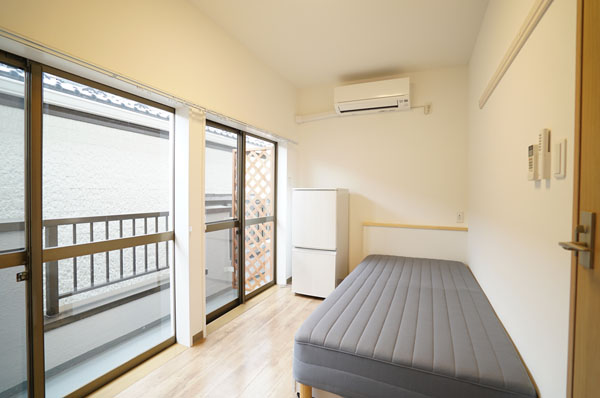
A sharehouse, on the other hand, has much lower barriers to entry. The total initial costs – a deposit and a cleaning fee – amount to slightly more than half a month’s worth of rent. The private room which I contracted for comes with its own bed, desk, chair, open wardrobe and even a refrigerator. The unlimited use of shared facilities, ranging from all-in-one ovens to separate washing and drying machines, and amenities such as sofa and large-screen TV with a fully paid for NHK subscription, is also included.

In most cases as well, the rent for a sharehouse covers the tenant’s share of utility bills and weekly housekeeping. Notwithstanding the moral hazard that this creates, I must say that this arrangement has been very convenient for this introvert who gets to work from home.

So yes, I guess I can save a lot of money. Whether I do though is a whole separate matter altogether.

2. Stay Flexible
In Japan, most contracts come with a 2-year lease. Early termination normally requires at least a month’s notice and may result in a forfeit of the deposit. In the case of contract renewal, the tenant usually has to fork out another month’s worth of rent as a “renewal fee” as well as pay for another 2-year’s worth of fire insurance. On the bright side, rent increases are rare for residential properties (because on the not-so-bright-side, wages have not been rising enough for landlords to reasonably pass on rent hikes).

Sharehouse living comes with lesser commitment. At the point of signing, tenants are obliged to stay for at least 3 months, though I have had neighbors who stayed only for a month. The contract duration is only for 6 months, after which an offer of contract renewal comes. Termination of lease requires only a month’s notice with no penalties. For someone who wasn’t sure how long he wanted to stay in Itabashi-ku, or to be in Japan for that matter, the flexibility was invaluable. I am not in Iidabashi, but I easily could be.

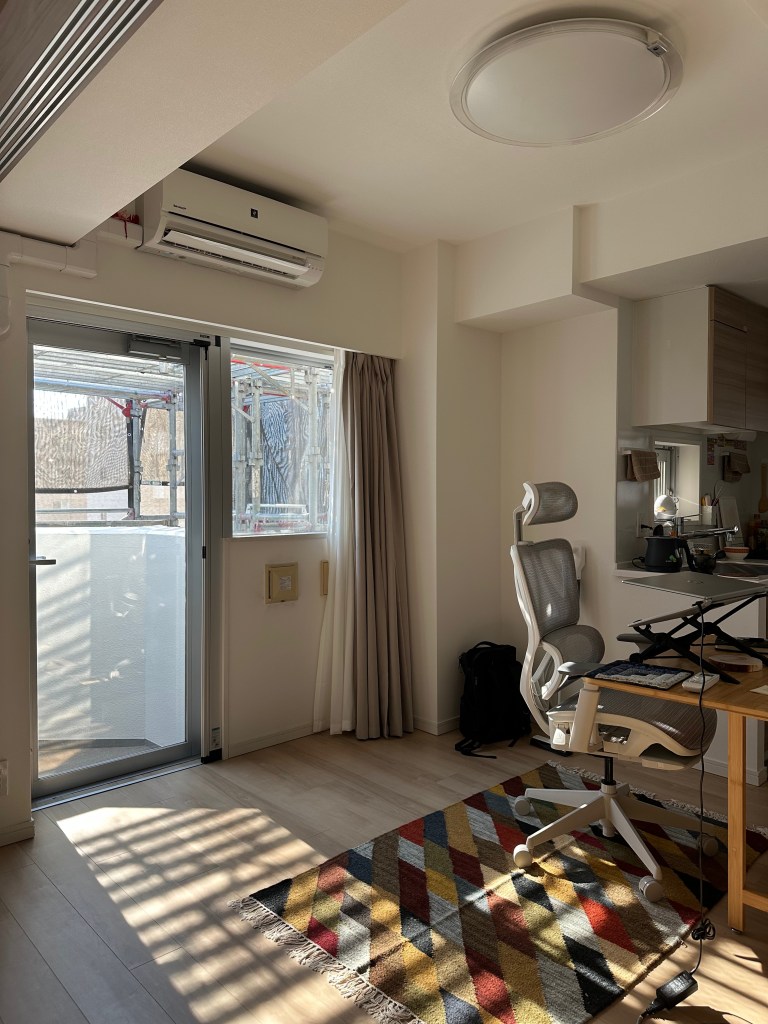
Nowhere did this flexible felt more precious than in the dark days right after the breakout of the Covid-19 pandemic when it felt like the best thing to do was to run home. More than four years later, I am living in the same sharehouse albeit in a much sunnier room and in a much sunnier place. Much of it can be attributed to the new south-facing floor-to-ceiling balcony that I have compared to the north-facing cavity of a window in my previous room. Though some of it can be said to come from being able to say “hello” to your fellow housemates at a time of hunger for the human touch.

3. Say Hi
I am known amongst my friends for being a low-maintenance friend. But low maintenance does not mean no maintenance. In a UK-based study with more than 458,000 people held over 2006 – 2010, researchers found that compared with people whose family and friends visited them daily, the risk of premature death for those who lived alone and never had visits increased by 39%. I was in a foreign land where I knew no one (save a few ex-colleagues) and unless I wish for myself an early death, it would be best to start making friends and “visiting” them daily à la the study.

A sharehouse felt like the best place to start. Not everyone is predisposed to being amicable of course but most conversations start (and end) with a reciprocated konnichiwa, or hajimemashite if you’re a real stickler for tradition. From there, they extend to “what’s cooking?” / “any plans for the day?” and in the warm cocoon of a living room, a new friendship is hatched. Before the pandemic outlawed social interactions, we even had a potluck Christmas party. I could barely speak the language then – cue the bungled McDonald’s order – but at times the other foreigners would kindly translate. Under an artificial potted ficus tree, we exchanged gifts (all gifts to be worth ¥1,000 (S$10) or less) in a secret santa exchanged. The Ginza currry retort pouch is long gone, but the accompanying curry spoon I received is now the spoon I use for foods beyond curry.

The warmness lingers.

I could continue waxing lyrical about the interactions and other small acts of kindness. But there are reasons why the word “sharehouse” is just as likely to elicit concern and anxiety in no small measure. Having an occupant : shower cubicle ratio of 7:1 meant that during peak times (9 PM – 11PM), there is a high chance of having to wait for one’s turn. There have also been countless times when I deliberately leave the house to order take-out when the only kitchen in the house is crammed with other hungry housemates.

The inconvenience extends beyond resource use; one unwittingly witnesses the ugliness of people who do not truly understand and uphold the “share” in “sharehouse”. From clogged drains in the shower cubicles to loud phone conversations in the dead of the night. The worst part is when these offences repeat and go unpunished as appeals from reluctant management representatives go unheeded. The inconsideration rankles and the frustration stews.

Man is a creature that can get used to anything, and I think that is the best definition of him

Fyodor Dostoevsky

Gradually, one becomes inured to these perturbations and reconciles with another quintessential Japanese characteristic – 仕方ない (shikatanai) – which is a weary acceptance of things that one cannot change, or find that the costs to be incurred not worthy of the change that it engenders. Or in other words, one becomes more jaded. I guess am no longer the same starry-eyed boy who looked forward to starring in his own season of Terrace House.

In the show, the participants come and go. A couple of episodes later, once they have gotten a feel of communal living and fulfilled whatever purpose is it that they appeared in the show for, they leave. It’s the same in my sharehouse, and I genuinely feel happy for some of my housemates when they have moved on to the next step in their lives. A sharehouse is a stopover, not a destination.

And I’m looking forward to graduating from Terrace House someday too.