

One of the small joys of being multi-lingual is to be tickled by nuances of words that are so easily lost in translation. One of which is the word “sanatorium”, which I discovered very pleasantly over the weekend. My original understanding of this word is that it is a euphemism for “mental hospital”, and is usually located in rural backwaters. In Japanese however, the equivalent term is 保養所, which has a different connotation altogether.
In this very specific case, it refers to a high-end holiday resort a stone’s throw away from one of the most storied attractions (The Hakone Open-Air Museum) in a historic holiday local (Hakone) in one of the world’s most highly vaunted country for tourists (Japan). The resort takes full advantage of its location along the mountain slope in its architecture which maximize the views of the surrounding forests from guest rooms and its multi-storied outdoor onsen. All while minimizing guest capacity to ensure an exclusive experience that serves the purpose of its existence: for guests to recuperate and recharge amidst the hustle and bustle of work as a salaryman (working in the Information Services sector in the Tokyo Metropolitan Area).
As such a salaryman, I contribute tens of thousands of yen in health insurance premium to TJK, the health insurance association which covers 310,594 other fellow salarymen of similar profile. Unlike in more capitalistic soceities, right to health is enshrined in the Japanese constitution when it was established in 1947. The natural consequence of upholding such a right is that health insurance premium is structured similarly to taxes; it rises as income rises. And I’ve been fortunate to be paying more and more the longer I have been here…while claiming for not much else beyond regular dental check-ups which are subsidized by 70%.
Which is why it was gratifying to be invited by a group of colleagues (and friends) to spend a weekend at the sanatorium owned and operated by TJK, the TJK Hakone Forest. The three of them, Hiro, Guilin and Maako joined the company at the same time late last year and dutifully perused the list of benefits that employees are entitled to. One of which is staying at the three sanatoriums owned by the association with the one in Hakone being the most luxurious of the three. All at the very-token price of 7,750 yen for room and 2 meals on a weekend at the heart of spring. With room referring to a 40 square-meter space with a floor-to-ceiling panoramic views of the eponymous Hakone forest that also comes with a kitchenette and a tub made from cypress bath. And meals referring to a full Japanese dinner banquet and a breakfast buffet with both Western and Japanese cuisine and locally-produced kamaboko (traditional Japanese fishcake).
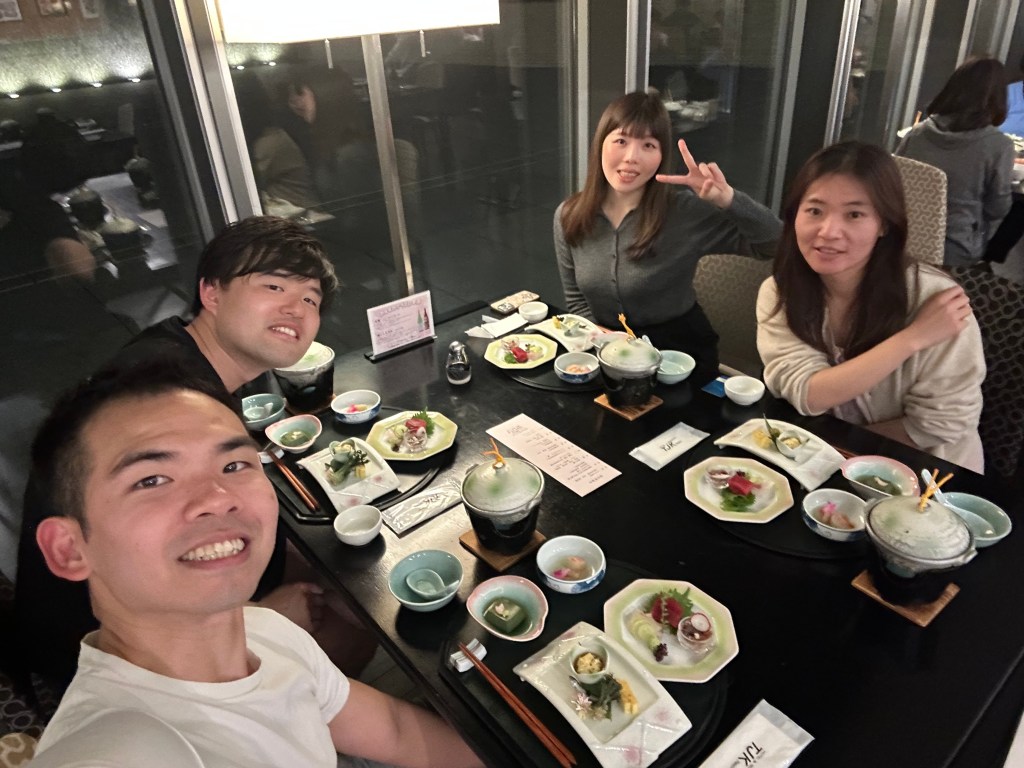
It’s such an unbelievable deal that a significant percentage of these 310,594 members frequently apply for it. Due to overwhelming demand, guests are chosen by ballot and we were fortunate enough to be chosen for our desired dates and accommodation type. In my case, I was even more fortunate to be invited to (or should I say free-ride) on my colleagues who went through the paperwork and a questionable booking system to secure this weekend getaway.

I had to constantly remind myself that this place is not a typical ryokan despite serving as one. The chasm in cover price and the level of amenities left a distant hum of cognitive dissonance in all of us who have been instilled with a mental map of price to expected offerings in Tokyo. It was a dissonance which we tried to both affirm and dispel by repeating at random intervals how unbelievable this whole set-up is. Even the prices of add-on drinks, lunch and amusement facilities were set at a level that further fuel this sense of unrealism; we were sure that karaoke rental rates there were even cheaper than those in the retro wooden two-storey establishments in the small towns of the countryside.
At a time where foreign tourists outnumber domestic ones (which we were made fully aware at Hakone Yumoto Station and on the ropeway ride), this resort stands out by being an almost-exclusive (with perhaps Guilin and myself being the only reason for the “almost”) Japanese enclave. This is not a surprise since eligibility for entry to this establishment is to be working and not touring in Tokyo. The other hurdle is the Japanese language itself. The advertisements and application for this resort are only in Japanese, with no incentive and effort for translations to other languages. This (in?)advertently repels foreign expats in Tokyo who technically can ballot for this. Once again and this time ironically so, the sheer lack of other foreigners in such a touristy environment entrenched my sense of disbelief.
Incentives shape architecture. In profit-making accommodations, rooms are usually compact and positioned adjacent to each other in cookie-cutter configurations to squeeze every last yen for every tsubo of real estate. In this non-profit sanatorium, rooms are generously spaced out to maximize the nature views and sense of openness of each. As if to encourage us to let go of the stress that we keep closed and contained within us on a day-to-day basis.
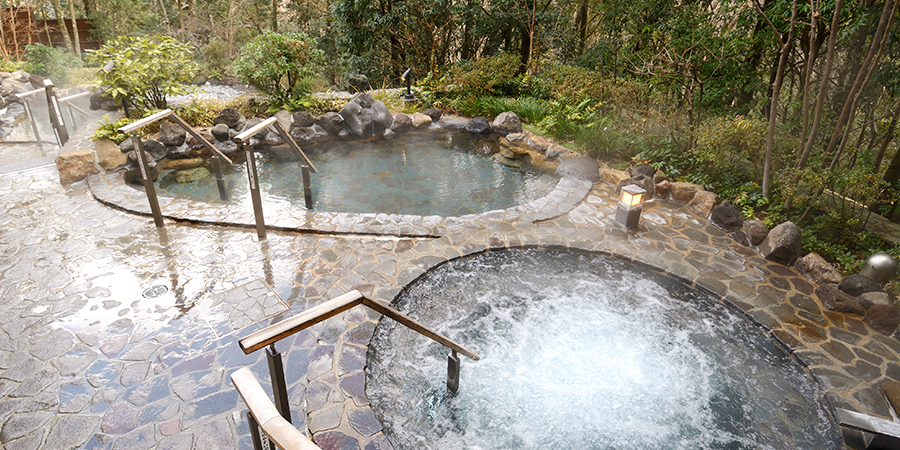
When it comes to de-stressing the Japanese way, one thinks of onsen. This is where the crown jewel of the resort truly shines. The changing room contains 50 (or thereabout) locker spaces, one sauna, one indoor pool and four outdoor pools cascading across three different levels and flanked by the forest. But whenever we were in the bathing area, there were 5 or so people (including us) and thanks to the different levels and distance, would not obtrude into one another’s personal space. To bathe both in the forest (森林浴) and springwater in such a dedicated expanse is the pinnacle of luxury and relaxation indeed.
When planning for the trip, there were some concerns about how we would entertain ourselves at night after dinner. To that end, both Guilin and Maako brought along their Nintendo Switch, with enough controllers to test our growing friendship by playing Overcooked. In the end however, our friendship was tested over table tennis. Or to be more specific, Hiro and Guilin’s friendship as they bickered (very much in jest I hope) over their competition and cooperation when it comes to returning the ping pong ball from Maako and me.
Admittedly, what I gained more from the trip than the scrumptious meal and the extravagant room and bathing facilities was a newfound appreciation for active entertainment and amusement. And I am sure it was not just me. Hiro might have initiated the idea for playing ping pong when reminiscing about his days at Cambridge but in the end, it was all four of us who more than willlingly returned to the nondescript amusement room twice the next day.
I have never (and still don’t) fancy myself a sports-type. Yet I cannot deny the excitement which I felt when seeing my shots land and building a rapport through volley records with my friends.
We counted the record number of times we could successively keep the ball bouncing on the table more than who “won” or “lost”. We cheered one another with every skilful serve or masterful maneuvering. We lost track of time playing and many calories along the way too.
I did not get much sleep that night (more a personal quirk than a lament about the facilities). But the sojourn in the resort did rekindle a passion to try new things, make more mistakes and get better. This perhaps more than anything is what was needed from the stagnation of being in the same type of job and doing the same kind of work for more than five years. Here, more than any 慰労会 (dinners given in appreciation of one’s hard work) or utterance of お疲れ様です (a greeting which loosely translates to ‘thank you for your hard work’ used among colleagues), I feel the gratitude for my work and commitment since coming to Japan.
I believe all of us felt the same. The only question is when our next trip back to the sanatorium will be, hopefully out of want than out of need.

 Jin Pang