
Getting out of the airport, one is immediately struck by the humidity of the place. Okinawa in May feels like Singapore with the thermostat set a few degree celcius cooler; my friends had travelled 3,750 km only to find themselves back to where they departed while I found myself home away from home. But perhaps the more appropriate comparison would be Malaysia. Instead of towering skyscrapers, concrete structures of a few storeys high, ranging from quaint shophouses to private residences, scatter across the lush and verdant tropical vegetation. Even the heart of Naha felt like a throwback to the 1990s, save for a handful of newly constructed luxury hotels.
Perhaps a three-way fusion of mainland Japan, Taiwan and Malaysia would be the best way to describe it. Yes, Japanese is the official language there but in Makishi Public Market, it is the signs in Chinese promoting the preparation of live seafood on display that stand out. The streets are grimier with stalks of weed and the occasional wildflowers poking out from crevices on the pavements but general litter is conspicuously absent. The people are a tad more coarse and direct, but also warmer in their interactions. We talked about how one could transplant a random shophouse from Taiwan or Malaysia there and no one would be able to tell the difference, since the Japanese kanji and Chinese hanzi are just about indistinguishable without the hiragana or katakana flourish.
The highlight of the trip though was the food. I have a soft spot for Okinawan food seeing how among all the different types of Japanese cuisine, it is amongst the most homely. Kyoto-style kaiseki is exquisite no doubt but it is not something that one can afford to indulge in regularly and its fanciness (and coldness) invokes an unwitting hesitation to actually eat it. But it’s a different case for Okinawan food where signature dishes are typically stir-fried or stewed with literal and figurative down-to-earth ingredients almost guaranteed to laden an empty stomach. And they are good for your health too. No wonder that Okinawa is also one of the world’s Blue Zones, areas where the population has a life expectancy much higher than the global average.
Food does not lend well to my mediocre photography skills and inability to resist the scrumptious dishes laid in front me (the camera never really got to “eat first”). So instead, here are 6 pictures that completely fall short of capturing our vacation on this idyllic island which once bore witness to the “typhoon of steel”.
(Note: The nicer photographs are attributable to my friends)
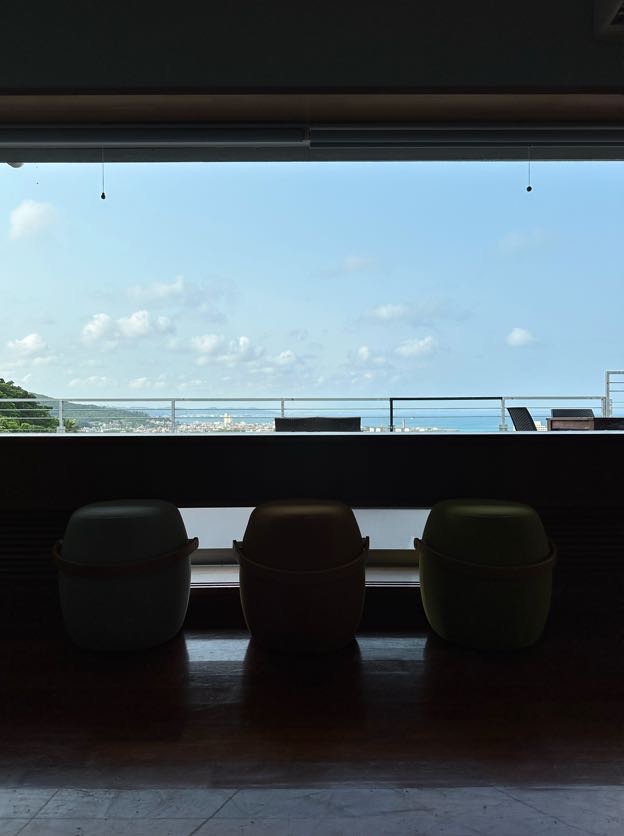
Nestled in Nanjo, a 30-minute drive from Naha, this Airbnb featured a jaw-dropping panorama of the urban coastline set against the cerulean Philippine Sea. It was home to our party of 3 for the entire trip, and a departure from the thrift that marked our Iceland trip seven years ago as students.

Instead of looking at the surface of the sea, we got to see the inside of it in the Churaumi (literally “beautiful sea”) Aquarium. It no longer holds the world record for largest aquarium in the world but it certainly holds a special place in our heart.
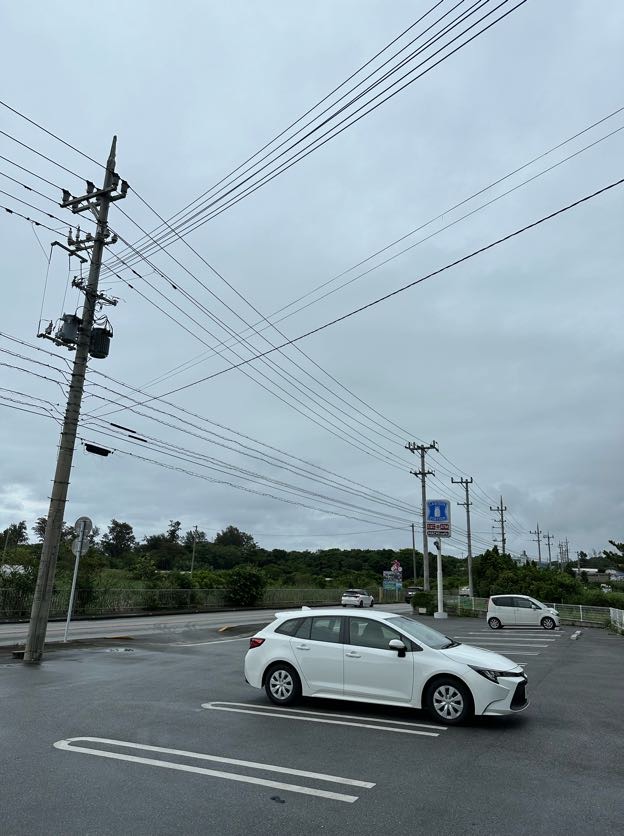
With the state of public transport infrastructure a far cry from that in the mainland metropolises, rental car was the way to go. And with it, we got to relish one of the idiosyncratic joys of roadtripping in Japan: a pit stop at the local konbini for coffee and snacks.

Limestone caves are not unique to Okinawa but the Gyokusendo is one of the largest cave systems in Japan; large enough to accommodate the cohorts of junior high school students who thronged through the narrow passageways.
The colored spotlights and shaved stalactite walkways were a reminder that this is as kitschy of a tourist attraction as they come. But that’s exactly what we were: tourists.
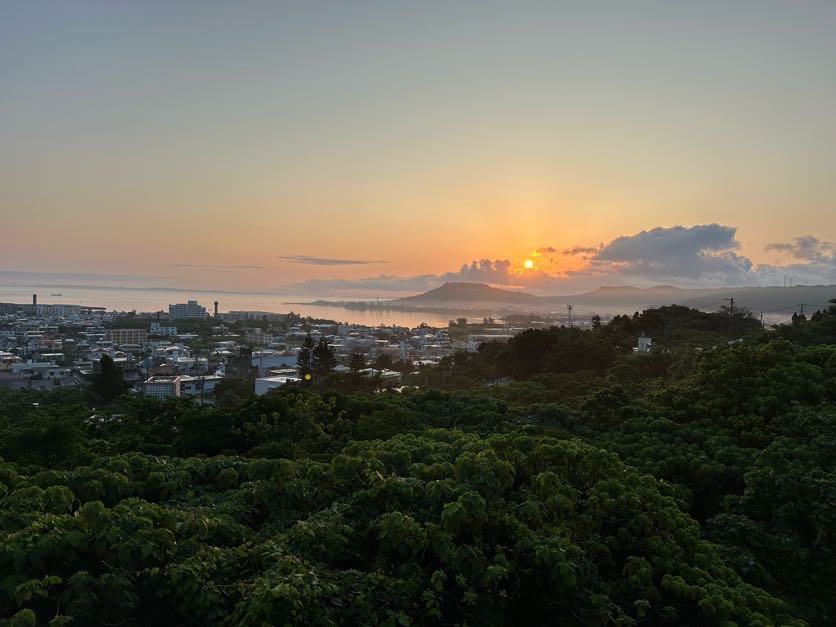
This was the promise on the Airbnb site that convinced us to book this place notwithstanding the musty odour and dated furnishings. A really great start to the day.
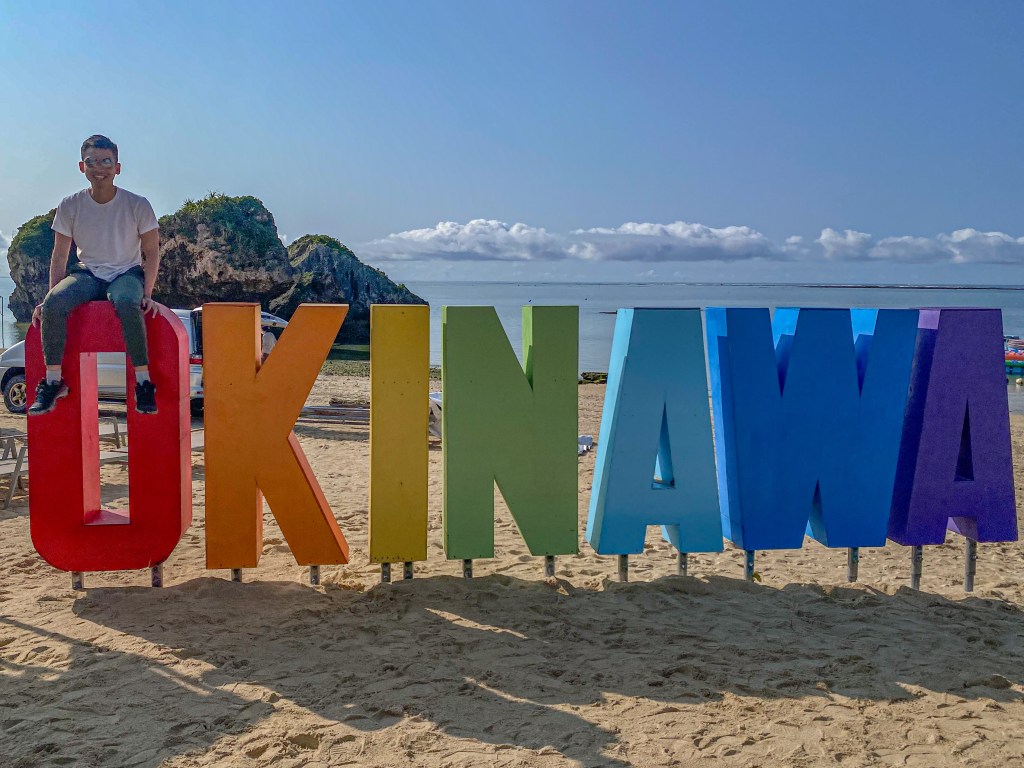
We were wondering about the best angles to take a photo with this iconic structure along Mibaru Beach when I noticed scratch marks on top of the “O”.
One “muscle-up” later.
 Jin Pang